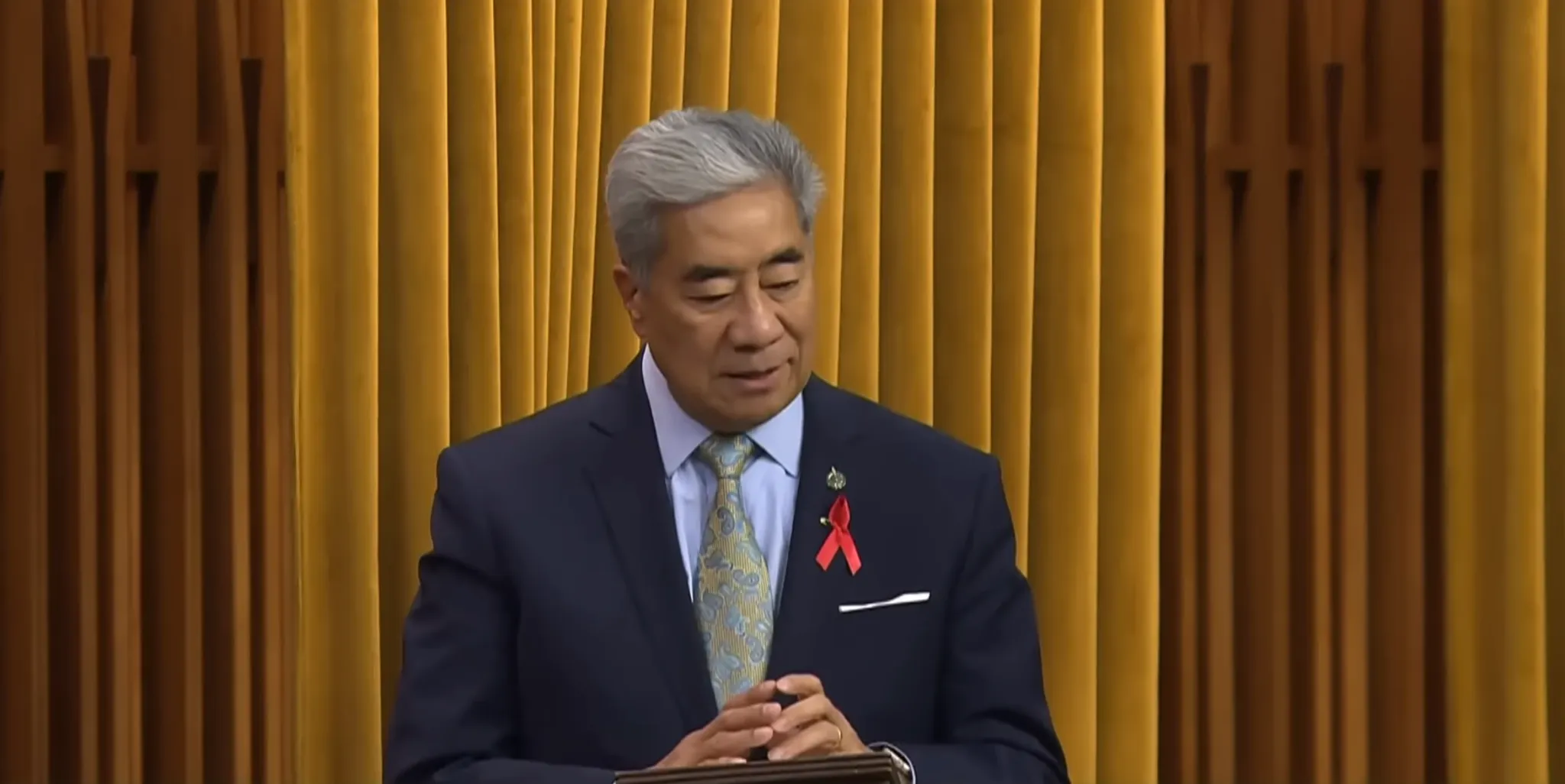
Michael Ma did not lose an election.
He did not resign his seat.
He crossed the floor.
Elected as a Conservative in Markham–Unionville, Ma joined the Liberal caucus partway through the parliamentary term, strengthening the government’s position in the House of Commons without triggering a by-election. The decision came quickly and with little public explanation.
In most ridings, that might have passed with minimal attention.
In this one, it did not.
Markham–Unionville has featured prominently in national discussions about foreign interference in Canadian elections. In recent federal campaigns, the riding drew scrutiny after candidates withdrew citing threats, security agencies flagged intimidation concerns, and intelligence briefings warned that certain districts were being targeted for influence operations linked to foreign states, particularly China.
That history does not assign blame.
But it changes the expectations.
Political decisions that alter representation without voter input carry more weight in ridings already shaped by interference concerns. Actions that might be routine elsewhere are examined differently here, because the context demands it.
It is against that backdrop that Ma’s decision unsettled many observers.
The timing only intensified the reaction. The floor crossing occurred relatively soon after the election, without prolonged public discussion and without any mechanism for constituents to reaffirm or reject the change at the ballot box.
Voters elected a Conservative MP.
The seat now functions as a Liberal one.
That gap between voter intent and political outcome is where unease begins. Democratic systems rely not only on procedure, but on public confidence. In districts already marked by sensitivity, confidence depends heavily on transparency. When significant political shifts occur without clear explanation, legitimacy becomes a matter of perception as much as process.
In this case, explanations were brief, and the riding’s unique context went largely unaddressed.
This episode also unfolds during a broader national reckoning. Canada has spent years confronting credible warnings about foreign interference in its democratic institutions. Parliamentary committees and intelligence agencies have repeatedly identified China as a principal concern, noting that influence efforts often operate through pressure, access, and alignment rather than overt control.
Within that environment, political developments are rarely viewed in isolation.
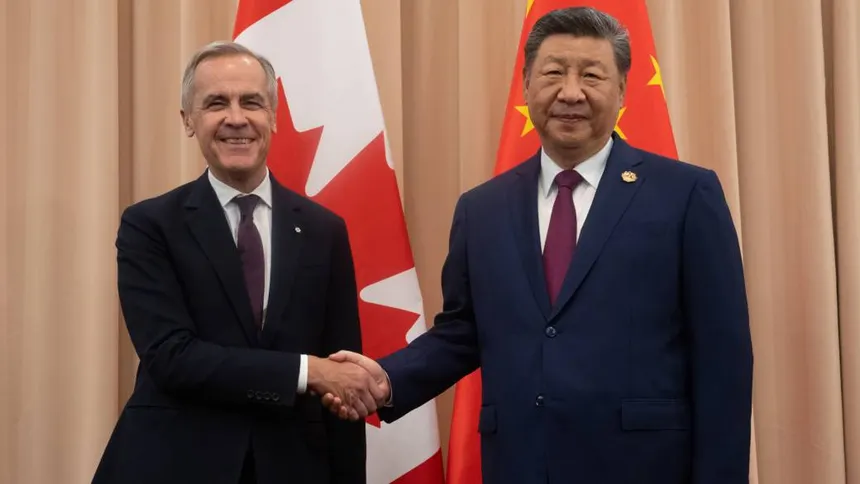
Prime Minister Mark Carney entered politics after a long career in global finance. Prior to becoming prime minister, he served as chair of Brookfield Asset Management, a multinational firm with extensive international operations, including significant financial exposure to China. Brookfield operated within Chinese markets and worked with state-linked financial institutions, as is common for firms of its scale.
Against the backdrop of heightened interference concerns, it is not difficult to see why some Canadians draw connections of their own. When a sensitive riding experiences an unexplained political shift, and the governing party is led by a prime minister whose prior career involved deep financial exposure to China, speculation is almost inevitable.
That speculation does not require proof to exist.
It arises from context, timing, and unanswered questions.
For many Canadians, the sequence of events in Markham–Unionville is difficult to ignore. A riding already shaped by interference concerns saw a sudden change in representation, one that benefited the governing party and occurred without a by-election or detailed public explanation.
Whether those decisions were justified is a matter of opinion.
What remains clear is that they were not meaningfully explained.
In democratic systems, unanswered questions tend to outlive official assurances. Trust does not vanish all at once. It erodes when decisions feel procedural rather than representative, and when transparency is treated as optional.
In places where scrutiny is already heightened, silence speaks louder than statements.
And when explanations fall short, people inevitably begin filling in the gaps themselves.
Sources & Reference Material
- Michael Ma – Member of Parliament for Markham—Unionville (official profile) — House of Commons of Canada
- Ex-Conservative MP Michael Ma crosses floor to join Carney Liberals — Global News
- Public Inquiry into Foreign Interference in Federal Electoral Processes and Democratic Institutions – Final Report, Volume 1 — Public Inquiry into Foreign Interference
- Liberals Replace Candidate Embroiled in Election Interference Scandal with Board Member of School Flagged in Canada’s Election Interference Inquiry — Todayville
- Carney’s Ethics Test: Opposition MP’s To Challenge Prime Minister’s Financial Ties to China — Todayville Calgary