
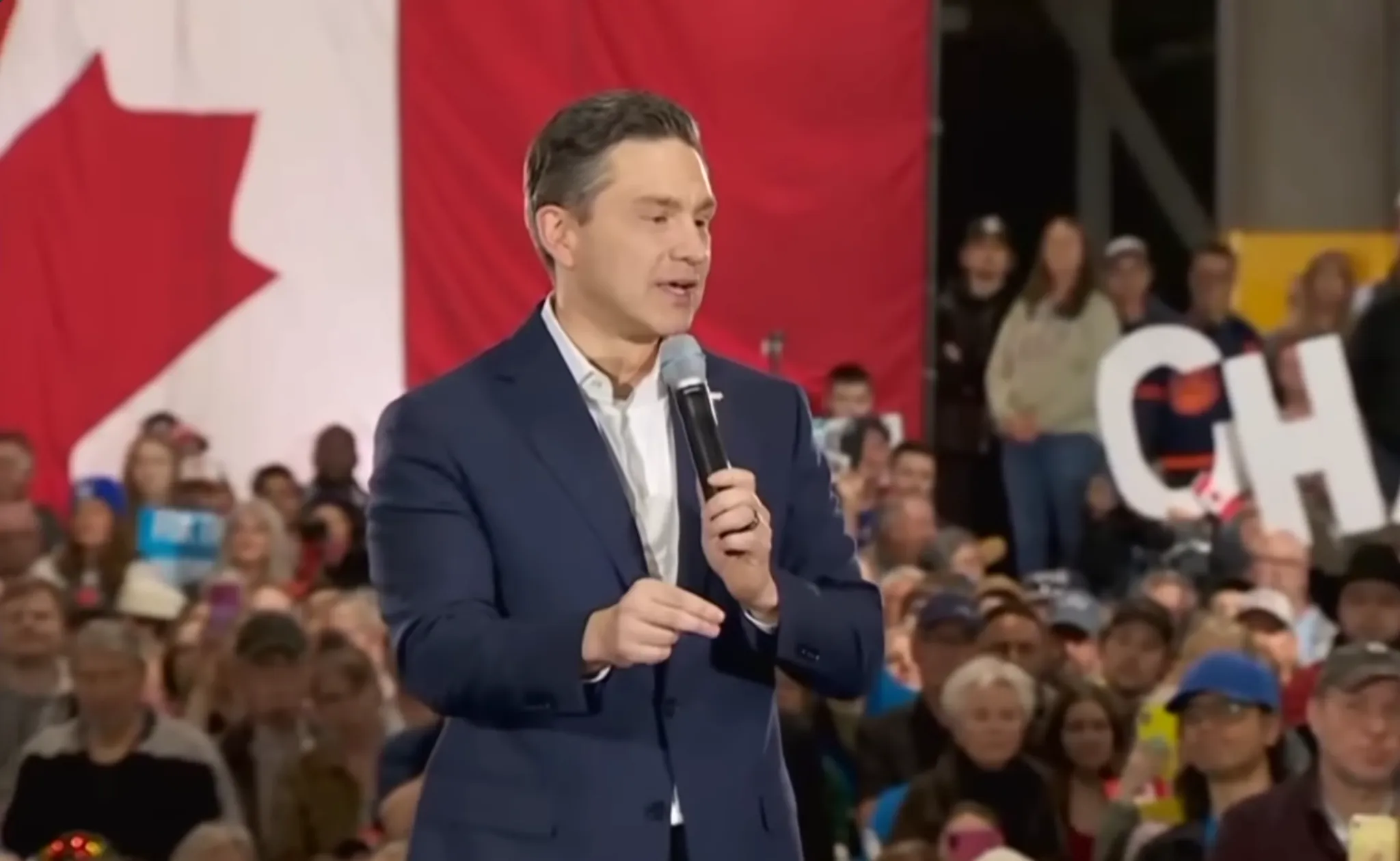
The professional activist set finally got the headline they’d been fantasizing about: Pierre Poilievre, defeated, heading into a leadership review. Then they checked the numbers, realized Conservative members still largely want to keep him, and had to improvise a new story. Enter Rabble’s latest sermon about “Trump echoing policies,” “hatred,” and a supposed moral emergency if Conservatives don’t dump their leader on schedule.
What’s actually happening is boring and normal: a federal party that lost an election is holding a leadership review at its convention, because that’s what its constitution says happens after a defeat. You wouldn’t know that from the coverage, which reads less like Canadian political analysis and more like a therapy blog for people who never emotionally recovered from 2016.
Rabble’s writer doesn’t pretend to be neutral, and neither will I. The difference is simple: they’re selling a fantasy about a party in moral collapse; I’m laying out the facts that show an activist class in full-blown Poilievre panic because their scare language isn’t working the way it used to.
Turning Routine Party Democracy into a Crisis Narrative
Start with the leadership review itself. The latest data on Conservative voters doesn’t show an organized revolt against Poilievre. It shows what you’d expect after a disappointing loss: a base that mostly wants to keep the leader, a chunk that wants change, and a lot of noisy commentary from people who don’t get a vote.
Among recent Conservative voters, a clear majority say Poilievre should stay on as leader and take the party into the next election. That majority has slipped since the campaign – again, totally normal after a loss – but it’s still a majority. Among the hard-core “definitely Conservative” crowd, support is even stronger; it’s the softer, “maybe Conservative” universe that’s more skeptical.
Now put that next to the script from Rabble and friends. They frame the January vote as a kind of moral reckoning: the moment when Conservatives finally “reject” Trumpism, identity politics, trans “hate,” and whatever else has been pinned to Poilievre this week. The awkward details – no organized leadership challenge, no declared rival, no caucus faction openly campaigning to dump him – get waved away as trivia.
This is how you turn routine party democracy into a crisis narrative: you take a standard review mechanism, slap the word “Trump” on it a dozen times, and hope no one notices that the people with actual ballots are a lot calmer than the people with panel chairs. It’s not political reporting; it’s fan fiction for Liberals who want a second election night.
Importing Trump to Avoid Talking About Canada
Read Rabble’s column and count how many Canadian facts you get versus American imports. Trump is in the opening breath. “Trump’s playbook.” “American Taliban.” “Reverse Robin Hood.” Alex Jones. “Common sense” as a Mike Harris slur. You get a blizzard of U.S. references and moral adjectives in place of any serious engagement with Canadian law or Conservative policy text.
The point of this framing isn’t to inform anyone. It’s to pre-poison the well. If Poilievre talks about parental rights, it’s not a response to Canadian polls or provincial debates; it’s “American-style hate.” If he talks about cutting red tape or shrinking the CBC, that’s not a legitimate policy argument; it’s the creeping hand of Trumpism. The message to the reader is simple: you don’t need to know what he actually said, you just need to panic.
It also conveniently dodges the real story in Ottawa. Mark Carney isn’t hauling the Liberals back to the centre; he’s repackaging Trudeau-era ideology as sober technocracy. His government scrapped the consumer-facing carbon tax only after it became politically suicidal, then refocused federal climate policy on industrial carbon pricing and net-zero industrial strategy that keeps the same machine humming in the background. On gender, this is a prime minister whose adult child has been publicly at the centre of debates over gender-affirming care and has written in student publications about growing up in that world. He is personally and politically invested in defending that orthodoxy, not about to challenge it.
So the “post-woke moderate” act is a costume change, not a conversion. Carney keeps the project; Poilievre gets turned into the cartoon villain that makes the costume look reasonable. When your main argument against a Canadian opposition leader is that he gives you Trump vibes, what you’re really saying is you’ve run out of Canadian arguments.
How “Hate” Inflation Silences Ordinary Canadians
On gender policy, the script gets lazier and nastier. According to Rabble, Conservatives have “embraced anti-trans policies,” Amnesty International calls their messaging “dangerous,” Danielle Smith is promoting “outright hatred,” and Poilievre wants to strip rights from a vulnerable minority. Every disagreement is collapsed into bigotry, every policy debate into “hate.”
Now line that up against public opinion they never mention. Leger’s national polling on sexual orientation and gender identity in schools found that most Canadians think parents should be told if their child asks to change gender or pronouns at school. Around half support using the notwithstanding clause to make sure parents are informed. Among parents themselves, support for parental notification is even higher. That’s not a fringe of frothing extremists; that’s the broad middle of the country.
Other national polling shows the same pattern: huge majorities saying parents should at least be informed about social gender transition at school, with Canadians more divided about whether parental consent should be required. The idea that this entire conversation is some “far-right” American import simply doesn’t match what voters actually think.
Against that backdrop, Poilievre’s position – biological males shouldn’t be in women’s bathrooms, shelters, change rooms and sports – is denounced by Amnesty as a “dangerous distraction” that puts trans people at risk. Pride organizations and activist outfits pile on, accusing him of inciting hate and “scapegoating.” The message from the NGO class is clear: if you agree with even part of what he’s saying, you’re on the moral hook with him.
So on one side you have activist NGOs insisting that this stance is so hateful it endangers lives. On the other, you have most Canadian parents quietly agreeing with at least some of it. When Amnesty and Rabble define “hate” wide enough to cover a clear majority of the public, they’re not protecting vulnerable people; they’re trying to criminalize dissent.
Housing “Facts” Straight from the Union Mailer
The housing section of Rabble’s hit piece is a textbook case of how propaganda gets laundered into “analysis.” The column claims Poilievre was “Housing Minister” under Stephen Harper and that his government “allowed 800,000 affordable rental units to be sold off to corporate landlords and developers.” Under Harper, we’re told, prices rose 70 per cent and Poilievre “did nothing.”
That 800,000 number didn’t drop from a Statistics Canada table. It came from a CUPE campaign flyer accusing Poilievre of being “corporate landlords’ best friend.” The flyer flatly declares that as “Housing Minister,” he allowed 800,000 affordable rentals to be sold off, alongside a grab-bag of talking points about his supposed love for “billionaires, banks and big polluters.” Rabble simply picks up the number and repeats it as settled fact.
From there, the narrative writes itself: the main cause of today’s housing disaster isn’t a decade of Liberal-era immigration surges, municipal bottlenecks, and cheap money, it’s “corporatization” and real estate investment trusts. Trudeau and now Carney, who presided over their own spectacular run-up in prices and rents, become bit players. The crisis is conveniently pinned on a nine-month stretch when Poilievre’s portfolio included CMHC.
When Poilievre actually put a housing bill on the table – the Building Homes Not Bureaucracy Act – the same crowd didn’t bother grappling with the core idea of tying federal cash to cities that actually approve building. They went straight to accusing him of trying to “cut” the Housing Accelerator Fund and make things worse, as if the current regime has been some roaring success.
If your entire analysis of a national housing disaster starts with a union mailer and ends with “it’s all the REITs and Poilievre,” you’re not doing economics. You’re doing campaign literature with a spreadsheet.
The Alex Jones Gambit and the CBC Problem
Rabble also leans hard on guilt by association, highlighting that Alex Jones – the American conspiracy shock-jock the Canadian media class loves to hate – once gushed over Poilievre as “the real deal.” From that, they spin out a trail of ominous questions: who is Poilievre really talking to, why won’t he get security clearance, what is he hiding? No evidence, just vibes and innuendo.
Whatever anyone thinks of Jones himself – entertainer, crank, or broken clock that’s occasionally right – the leap from “this guy likes you online” to “you must secretly share his entire worldview” is pure smear. There’s no indication Poilievre has sought Jones out, taken advice from him, or built policy around him. The point isn’t proof; it’s a cloud of suspicion you can never quite clear.
The same move shows up on the CBC question. Poilievre has been explicit: he wants to end public funding for the state broadcaster. In a normal democracy, that’s a legitimate debate about the role of government in media. In Rabble-world, it’s an authoritarian attempt to “dismantle democracy” and silence brave truth-tellers.
Strip away the hysterics and it’s straightforward. A politician who threatens the revenue of a media ecosystem that broadly shares Rabble’s worldview will be painted as a danger to the free press. It’s not about defending some abstract principle; it’s about defending a funding model and a cultural monopoly.
The Alex Jones fixation isn’t about protecting Canadians from conspiracists. It’s about protecting a class of media and NGO insiders from a leader who’s finally willing to pull their plug.
What’s Actually Driving the Desperation
Once you cut through the Trump cosplay and the moral panic, three things remain.
First, Conservative members are not in open revolt. They’re skeptical and bruised by defeat, but most still lean toward giving Poilievre another shot. The polling shows a clear majority of recent Conservative voters want him to stay, even if that support has softened. There is anxiety, but there’s no organized palace coup and no serious challenger in the open.
Second, the “hate” narrative on gender and parental rights is wildly out of sync with where most Canadians actually are. Polling finds majorities supporting parental notification on pronoun and gender changes in schools, and sizable blocs willing to use the notwithstanding clause to enforce that principle – while still supporting broad protections against discrimination. That’s the real centre of gravity: cautious about compelled ideology, supportive of basic decency.
Third, the economic record of the activist camp’s own political allies is a mess. Housing affordability has imploded under governments of every colour, but especially over the last decade. Carney’s Liberals have already junked the most obviously suicidal piece of Trudeau’s climate package – the visible consumer carbon tax – while leaving the industrial carbon machinery and net-zero ambitions in place. Yet outlets like Rabble keep insisting the real danger is the guy who wants fewer bureaucrats, more homes, and fewer media subsidies.
That’s the real story. The loudest progressive voices can feel that the old magic words – “far right,” “Trumpian,” “dangerous,” “hate” – don’t shut down debate the way they used to. Canadians aren’t all suddenly conservatives. But more of them every year are looking at their rent, their kids’ school policies, their tax bill, and the latest NGO press release and thinking: this doesn’t add up.
Rabble’s Poilievre piece isn’t a warning. It’s a symptom – the sound of a political class realizing Canadians are starting to ignore them, and that the “woke emergency” routine is finally losing its sting.
Sources & Reference Material
- Future of the CPC: A (declining) majority of Conservative voters would keep Poilievre as leader in January — Angus Reid Institute
- Sexual Orientation and Gender Identity in Canada — Leger
- Pierre Poilievre’s comments about trans women ‘a dangerous distraction,’ Amnesty International Canada says — Amnesty International Canada
- PIERRE POILIEVRE (campaign flyer) — CUPE
- The Conservative Party needs to review its Trump echoing policies — rabble.ca
- Removing the consumer carbon price, effective April 1, 2025 — Department of Finance Canada
- EXCLUSIVE: Mark Carney sent daughter to discredited U.K. Tavistock Transgender Clinic — Juno News