The oldest trick in the magician’s handbook is the flourish. The right hand waves a red silk handkerchief—bright, loud, impossible to ignore—while the left hand palms the coin.
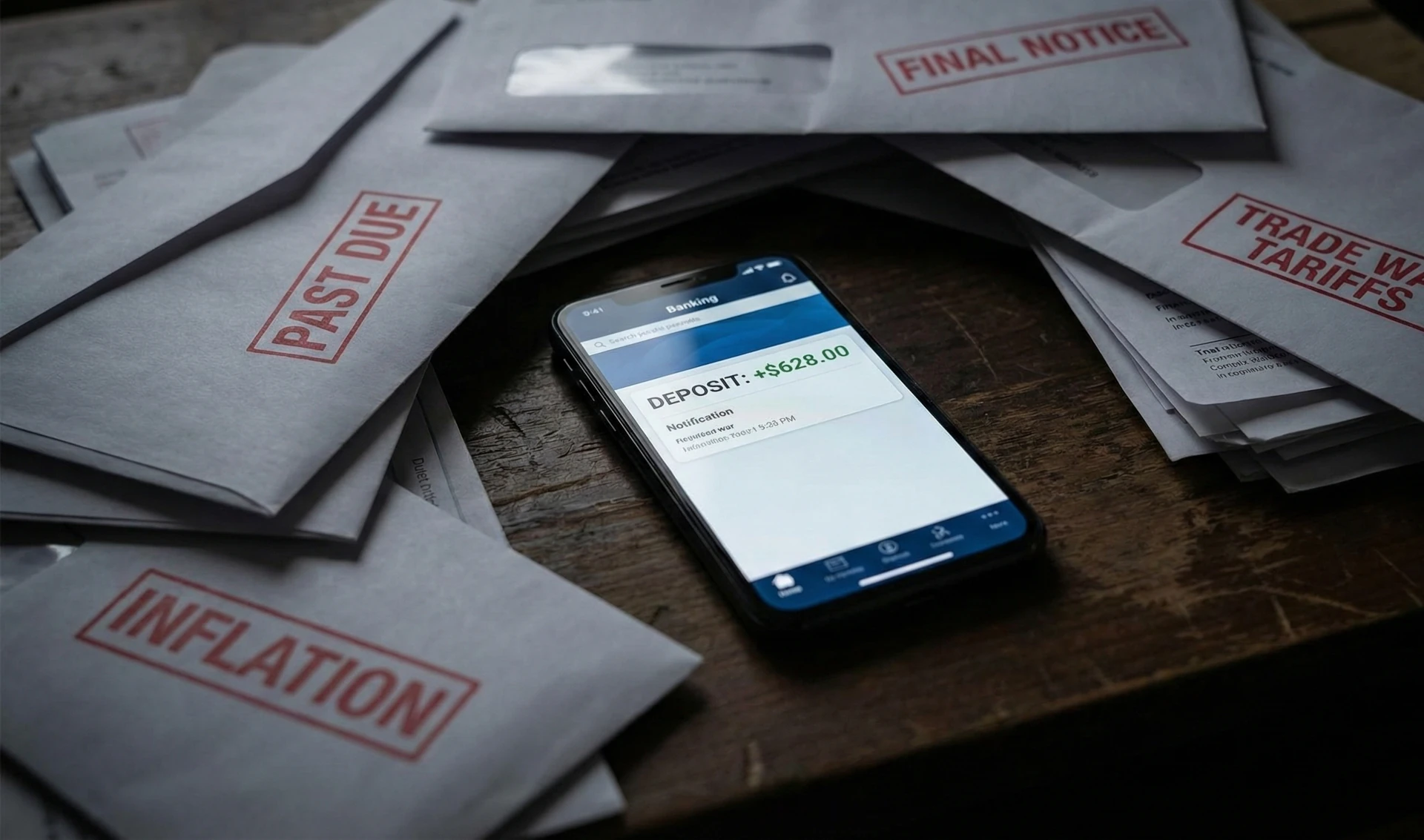
For the last three weeks, the Prime Minister’s Office has been waving the red handkerchief of Canola tariffs. Let’s be clear before we go further: the pain this causes on the prairies is real. When Beijing blocks a shipment, families lose sleep, margins vanish, and generational farms take a hit. We are not downplaying that economic violence.
But two things can be true at once. The attacks on our farmers can be real, and they can simultaneously be a useful distraction for a government engaging in a much darker game.
The press gallery is eating it up, churning out hourly updates on vegetable oil margins and “tough talk” from the PMO. But it is a curated crisis. It is designed to occupy your attention while the real deal—the one that actually shifts the balance of power—gets signed in a quiet room in Shanghai.
While you were worrying about salad dressing prices, Mark Carney was finalizing the transfer of Canada’s 21st-century sovereignty. The Canola War is the distraction. The Lithium Racket is the reality.
The Davos Deception: “The Illusion of Purpose”
To understand the magnitude of the con, you have to look at what happened just this Tuesday in Davos.
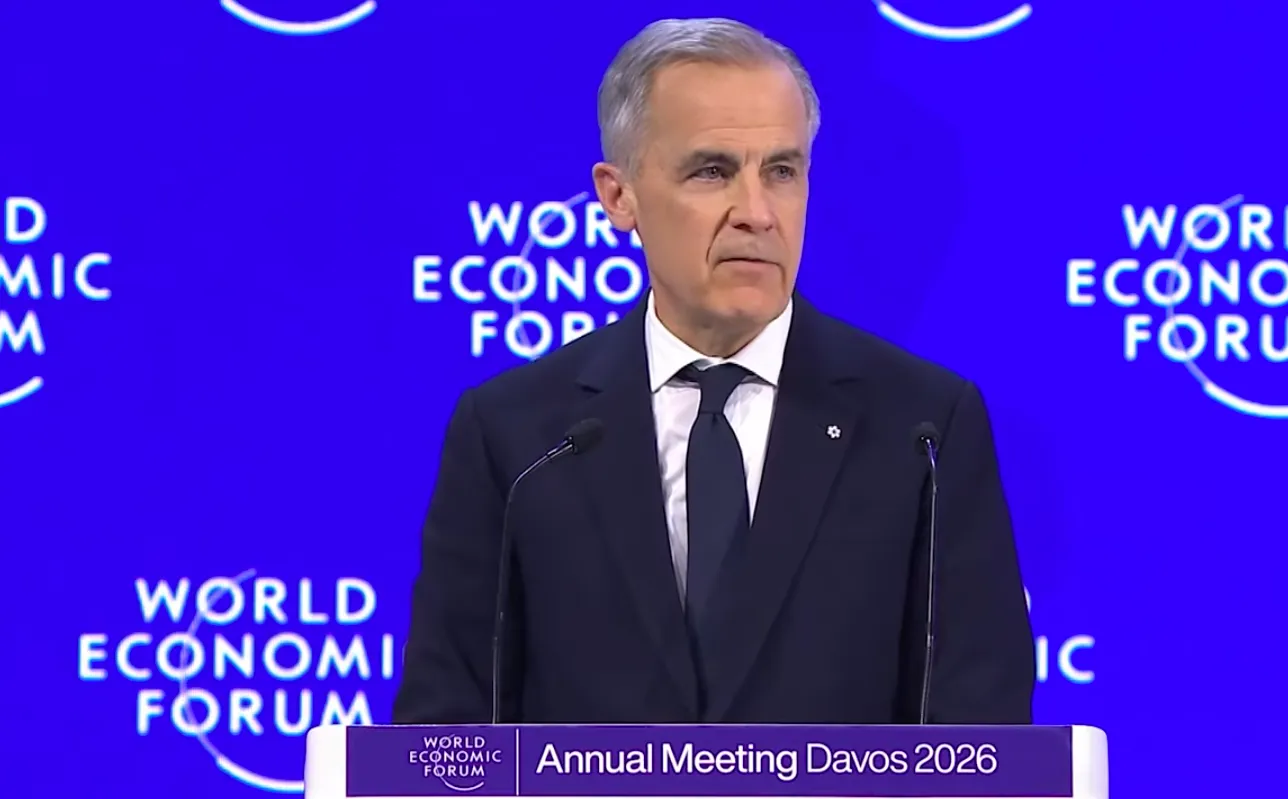
Prime Minister Carney stood on the World Economic Forum stage—the friendly territory where he is most comfortable—and delivered a speech that was vintage Carney. It was smooth, eloquent, and dangerously detached from reality. He told the global elite that “a country that cannot feed itself, fuel itself, or defend itself has few options.”
It was a beautiful soundbite. But in a response released today, Opposition Leader Pierre Poilievre dismantled the PM’s rhetoric with a single, devastating observation:
“If Liberal words and good intentions were tradable commodities, Canada would already be the richest nation on Earth.”
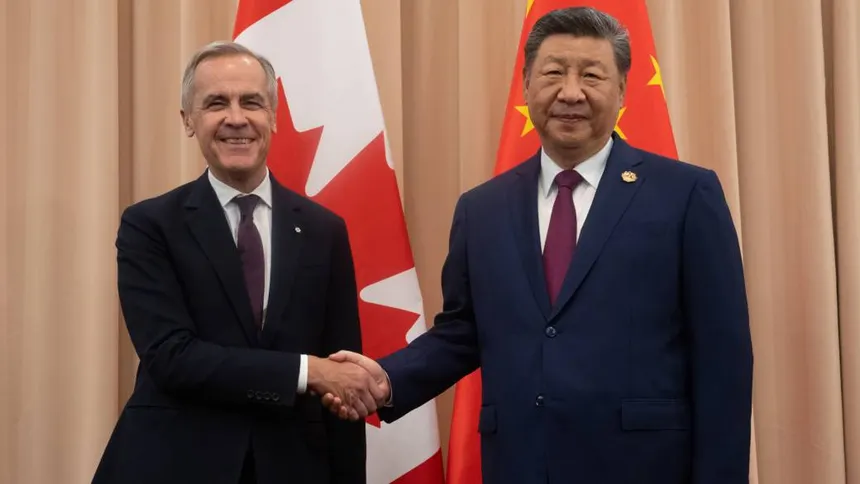
Poilievre warned us about the dangerous gap between Carney’s “illusion of purpose” and the brutal facts on the ground. While Carney was lecturing the world on democratic values, he had—less than a week prior—inked a “Strategic Partnership” with the very regime he called our greatest threat.
Poilievre noted the sickening irony of the Prime Minister quoting Vaclav Havel—a hero of the fight against totalitarianism—”less than a week after launching a ‘Strategic Partnership for a New World Order’ with the Chinese communist regime.”
A partnership, Poilievre reminded us, with a government that “kidnaps our citizens, steals our technology, and interferes in our elections.”
We bought the Davos speech. And now, the bill for that “partnership” has come due. The Carney government has agreed to allow 49,000 Chinese EVs into Canada annually at a preferential 6.1% tariff rate.
The Permit Paralysis: Buying Back Our Own Dirt
This deal for 49,000 imported EVs isn’t just a trade agreement; it is the final receipt for a decade of industrial failure.
Why are we forced to import these vehicles? Because we cannot build them here. And why can’t we build them here? Because we sent the ingredients to China years ago. This brings us to the “Dirt Scam.”
Canada sits on an estimated 3.2 million tonnes of hard-rock lithium resources. We have the raw material to be a superpower. But instead of refining it into batteries in Ontario or Quebec, we are shipping the raw rock to the very country we are now buying cars from.
As Poilievre argued in his response video, “we have the resources under our feet; the only thing missing is permits.”
The Carney government talks about a “Green Transition,” but they haven’t removed a single layer of the “anti-development laws” like Bill C-69 that block domestic refining. We can dig the rock out of the ground (barely), but we cannot process it because the impact assessments alone take a decade.
So, the economic cycle is a closed loop of failure:
- The Extraction: We mine spodumene (raw lithium ore) in Canada.
- The Export: We sell that raw dirt to China for pennies on the pound because the Liberals refuse to approve domestic refineries.
- The Buy-Back: China’s state-owned refineries turn our dirt into battery cells using subsidized coal power.
- The Markup: We buy those batteries back—inside those 49,000 EVs—for $15,000 a pop.
In 2024 alone, Canada imported $1.4 billion worth of lithium-ion batteries. We are effectively paying Beijing to take our resources. It is a massive wealth transfer disguised as “Green Energy.”
The Brookfield Factor: Portfolio Protectionism
Why would a Canadian Prime Minister agree to this? Why trade legitimate national security for a bad economic deal?
You have to look at the balance sheet he left behind. Before he was PM, Mark Carney was the Head of Transition Investing for Brookfield Asset Management. This isn’t just a line on a resume; it is the key to understanding his geopolitical worldview.
Brookfield is a global giant with billions in assets tied up in China, including commercial real estate in Shanghai and a massive portfolio of renewable energy projects. Through its subsidiary Oaktree Capital, the firm has explicitly argued that China is an “opportunity” precisely because of its grip on supply chains.
In fact, Oaktree memos have stated that China’s control over “commodities such as copper, lithium, cobalt and rare earth metals” makes it a “vital player” in the energy transition.
This creates a structural conflict of interest that no “blind trust” can fix.
- The Transition Trap: Carney’s entire economic philosophy is built on the “Energy Transition.” But you cannot build solar farms or wind turbines cheaply without Chinese manufacturing.
- The Asset Exposure: A full-blown trade war or a complete ban on Chinese tech would decimate the value of the very asset class Carney spent years building.
- The Result: “Portfolio Protectionism.” The “Strategic Partnership” isn’t about protecting Canadian sovereignty; it’s about de-risking a global investment portfolio.
Brookfield targets gigawatts of renewable capacity in China. They need Beijing’s cooperation to keep those assets profitable. When Carney sits across the table from President Xi, is he negotiating for the Canadian worker, or is he ensuring the “Transition Fund” returns don’t take a hit?
The Canola farmers are expendable collateral. The asset managers are the protected class.
The Trojan Horse on Your Driveway
But the economic fleecing is only half the problem. The other half is parked in your driveway.
The government’s new “EV Supply Chain Integration” deal—the one allowing those vehicles in—opens the floodgates for Chinese battery technology to enter the Canadian grid.
The US Commerce Department has already flagged this technology as a “catastrophic” risk. They aren’t worried about the motor; they are worried about the Vehicle Connectivity System (VCS). A modern EV is not a car; it is a sensor array on wheels. It has cameras, microphones, LiDAR, and constant cellular connectivity.
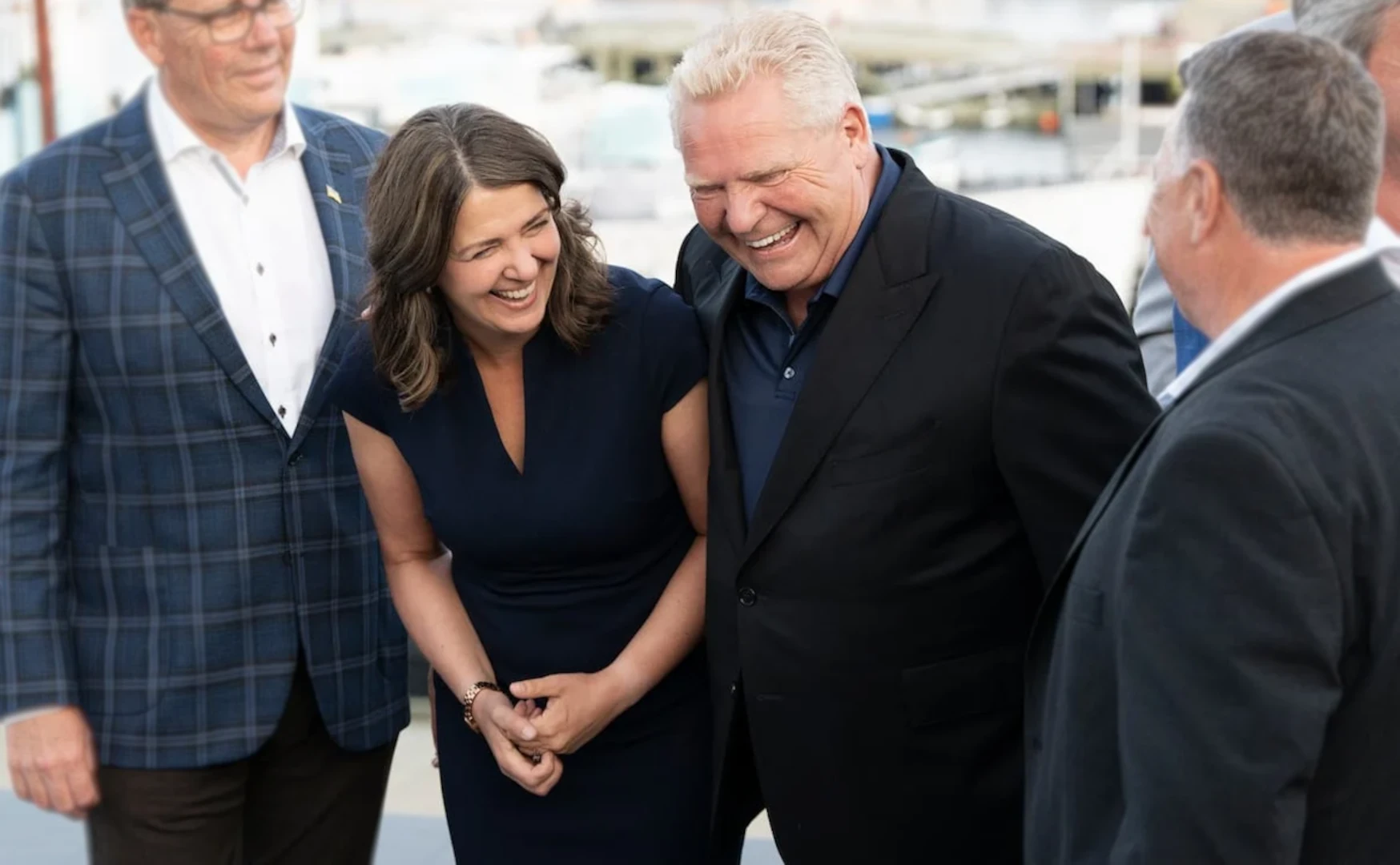
By integrating Chinese battery management systems (BMS) and software into our critical infrastructure, we are installing thousands of surveillance nodes across the country. As Premier Doug Ford bluntly put it, these are “spy cars.”
When that battery goes into a car, it listens. When it plugs into the grid, it talks. And the data doesn’t stay in Mississauga or Burnaby.
Under Article 7 of China’s 2017 National Intelligence Law, any Chinese organization is legally compelled to “support, assist and cooperate with the state intelligence work.” There is no court order required. If the Ministry of State Security wants the data from the car parked at CFB Trenton, the manufacturer must provide it.
The Verdict
The deal is done. The ink is dry. The “Green Economy” we were promised—one of Canadian manufacturing and energy independence—was a lie.
Instead, we have been signed up for a new role in the global order: the resource colony. We will export our raw wealth, import their surveillance tech, and thank them for the privilege of saving the planet.
In his Davos response, Poilievre asked: “Carney told the crowd… that a country that cannot feed itself, fuel itself, or defend itself has few options. So, why can’t we?”
The answer is simple: The Prime Minister sold the fuel to someone else.
Don’t look at the Canola. Look at the lithium. That’s where your country went.
Sources & Reference Material
- Response to Mark Carney’s speech in Davos (Jan 23, 2026) — Conservative Party of Canada
- Mark Carney’s Davos Speech Transcript (Jan 20, 2026) — Prime Minister of Canada
- Lithium Facts & Trade Data — Natural Resources Canada
- China National Intelligence Law (Article 7) — Stanford DigiChina
- China: Priced-in Pessimism Opportunity — Brookfield Oaktree Wealth Solutions