Donald Trump ordered U.S. airstrikes on ISIS targets in northwest Nigeria on Christmas Day, saying the operation was a direct response to escalating attacks on Christians. The strikes hit Islamic State–linked militants in Sokoto state, a region that has seen repeated massacres and kidnappings of Christian communities by jihadist factions and armed gangs.
U.S. Africa Command confirmed the operation, saying it was conducted at Trump’s direction and in coordination with the Nigerian government, with an initial assessment that multiple ISIS fighters were killed. Nigerian officials acknowledged the cooperation but reverted to their usual language about a “complex” security situation involving jihadists, bandits and communal conflicts.
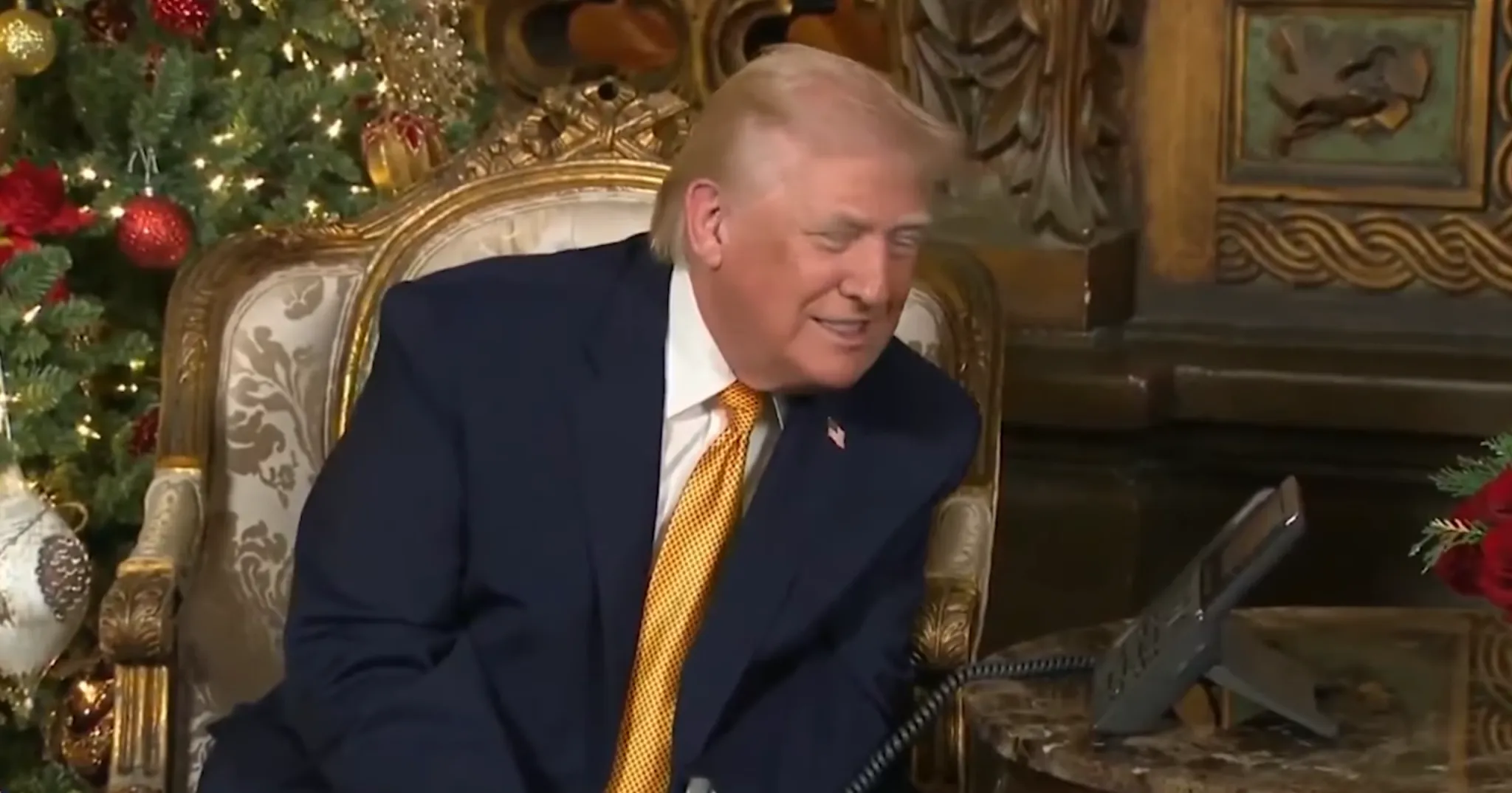
Trump, for his part, made no effort to blur the motive. In a Christmas Day message, he called the mission a “powerful and deadly strike against ISIS Terrorist Scum in north-west Nigeria, who have been targeting and viciously killing, primarily, innocent Christians, at levels not seen for many years, and even centuries.” The strikes, he said, were retaliation for the “slaughtering of Christians” in Nigeria—putting words to a reality church groups and human-rights monitors have been documenting for years.
A Christmas Strike on ISIS in Sokoto
According to U.S. and Nigerian officials, the strikes were launched against ISIS-linked positions in Sokoto state. U.S. military briefings describe the targets as militants tied to a pattern of attacks on villages and churches in the wider region, part of an Islamic State effort to entrench control in rural northern Nigeria. The Pentagon released footage of a projectile launched from a U.S. vessel, and Defense Secretary Pete Hegseth has signalled that further operations are possible if the killings continue.
Nigeria’s foreign ministry confirmed that the action formed part of ongoing security cooperation with Washington, pointing to intelligence sharing and joint planning. At the same time, Abuja stressed that armed groups in the country have also killed Muslims and security forces, and repeated its line that the violence should not be reduced to a single sectarian narrative.
Whatever Abuja says for diplomatic consumption, the basic fact is clear: on Christmas Day, the U.S. president ordered live munitions on ISIS camps in a specific corner of Nigeria because Christians there are being hunted down and murdered.
The Numbers Are Not an Argument: They’re a Verdict
The scale of the killing is not in serious dispute. A 2023 report by the Nigerian NGO Intersociety, summarized by Vatican News and other outlets, estimated that at least 52,250 Nigerian Christians had been murdered between 2009 and 2023 by Boko Haram, Islamic State affiliates and similar Islamist actors. In the same period, around 18,000 churches and 2,200 Christian schools were attacked or destroyed. The report also counted tens of thousands of moderate Muslims killed in related violence.
Other Christian persecution monitors land in the same territory. Open Doors and allied research describe Nigeria as the deadliest country in the world for Christians, year after year. Some analyses say roughly nine out of ten Christians killed for their faith worldwide in recent years have been Nigerian. In plain language: if you are a Christian believer murdered for your faith, there is a very good chance you died in Nigeria.
Nigeria’s wider security mess does have many strands: jihadist insurgency in the northeast, “bandit” gangs running kidnap and extortion economies, farmer–herder clashes over land, and ethnic militias settling scores. But none of that erases the pattern. When tens of thousands of Christians are murdered, churches are burned in their thousands, priests and pastors are systematically abducted or executed, and specific Christian-majority communities are repeatedly targeted, the word for that is genocide against Christians. Not “complexity,” not “random insecurity”—genocide.
From Warnings on Paper to Missiles in the Air
Trump’s Christmas strikes didn’t come out of nowhere. For years, the U.S. Commission on International Religious Freedom (USCIRF) has been flagging Nigeria as one of the world’s worst offenders on religious freedom. In its 2025 annual reporting, USCIRF again recommended that Nigeria be designated a “Country of Particular Concern” under U.S. law—a label reserved for governments involved in “systematic, ongoing, and egregious” violations of religious freedom.
In mid-2025, USCIRF released a country update that spelled out, in bureaucratic language, what Nigerian bishops and Christian NGOs have been saying in far more direct terms: Christian communities in large parts of the country are facing relentless attacks, and the state has repeatedly failed to protect them or punish the perpetrators. By the autumn, Washington dropped the euphemisms. The U.S. government formally placed Nigeria on its Countries of Particular Concern list, tying the decision directly to the mass-scale persecution of Christians and the impunity enjoyed by those who attack them.
Trump leaned into that reality publicly. He accused Nigerian authorities of turning a blind eye to the murder of Christians, warned that there would be consequences if the slaughter continued, and threatened action if Abuja did not get a grip. The Christmas Day strike is being presented by the White House as the next logical step: after warnings, designations and sanctions, the U.S. has now used force against ISIS-linked militants it says are responsible for some of the worst of the anti-Christian attacks.
Abuja Denies the Label. The Facts Don’t.
Nigeria’s government is now trying to square the circle. On one hand, it wants the intelligence, hardware and deterrent power that come with U.S. cooperation. On the other, it has loudly rejected Washington’s decision to name it a Country of Particular Concern, calling the designation misinformation and insisting that foreign critics do not understand local realities. Officials repeat that Christians and Muslims have both suffered and complain that outside voices are exaggerating religious motives.
That messaging may play well with Western diplomats who would rather not confront the word “genocide,” but it doesn’t survive contact with the casualty lists. Nigerian and international Christian groups have been tracking the bodies for years. Catholic bishops in the north have warned that parts of their dioceses are being emptied of Christians. Advocacy groups like Intersociety, Release International and others have documented targeted raids on Christian villages, the destruction of churches and the execution of clergy.
The Nigerian state’s failure is not that it produces the violence directly, but that it has repeatedly failed to stop it, punish it or even describe it honestly. Rejecting the label doesn’t change the reality on the ground. If anything, Trump’s decision to bomb ISIS camps in Sokoto over “slaughtered Christians” is a reminder that other governments are no longer willing to pretend this is just a crime statistic problem.
A Rare Global Spotlight on Persecuted Nigerian Christians
For more than a decade, most of the serious reporting on Nigeria’s Christian dead has lived on church websites, in Catholic and evangelical outlets, and in specialist human-rights reports. Every few months, a massacre of worshippers or the kidnapping of schoolchildren would make a brief appearance in the wider media, then disappear again.
The Christmas strike changes the profile of the story. A U.S. president ordering missiles on jihadist positions and saying explicitly that he is doing it because Christians are being massacred in Nigeria is not something other capitals can quietly ignore. The persecution of Nigerian Christians is now connected to a live, ongoing U.S. military operation. That forces the question in every G7 capital: if the facts are serious enough to drive U.S. cruise missiles, what exactly is your position?
Where Is Canada? Carney’s Liberals and the Double Standard
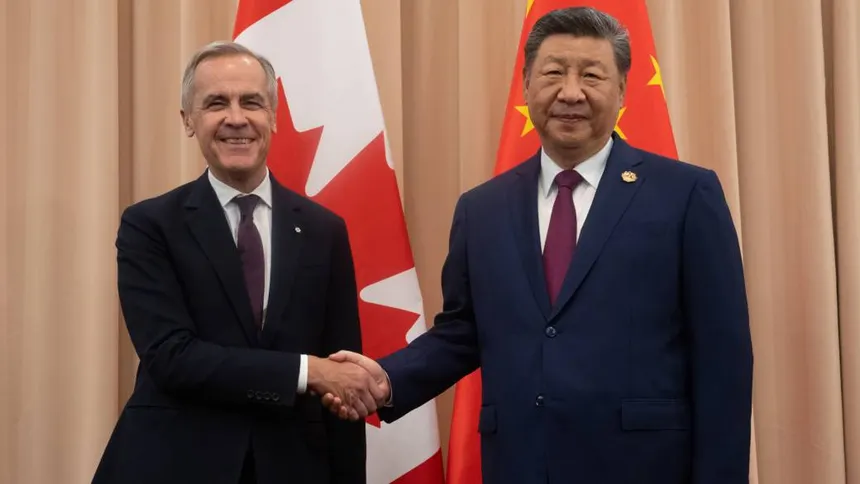
Since taking office in March 2025, Mark Carney has never struggled to find his voice on the Middle East. In a matter of months, he moved to recognise the State of Palestine, joined G7 partners in pushing for a Gaza ceasefire, spoke at length about Palestinian civilians, and framed Canada as a principled defender of Palestinian rights in international forums. On that file, Carney’s Liberal government speaks loudly for Palestine and makes sure the cameras are rolling.
By contrast, as we laid out in a recent TGWR piece on Christians in Nigeria, the same government has managed to tiptoe around more than a decade of Nigeria massacres and persecuted Christians without a single clear, prime-ministerial statement focused on the mass killing of believers there. A scan of Carney’s PMO releases and Global Affairs material shows Nigeria mostly as a development and Africa-strategy file—gender programming, climate language, governance jargon—not as the most lethal place on earth to be a Christian.
That contrast was already morally ugly. After Trump’s Christmas strike, it looks even worse. In Washington, the Nigeria file has moved from memos to sanctions to a formal persecution designation and now to missiles aimed at ISIS camps. In Ottawa, under Carney, the Christian genocide in Nigeria is still something the government has not been willing to name. It’s not that they don’t know; it’s that they won’t say it. That silence on Nigerian Christians is no longer just an omission. It’s selective compassion turned into policy.
What This Moment Forces Canada to Decide
Trump’s Christmas strikes will not, by themselves, stop the killing in Nigeria. Villages in the the middle belt and north will still be vulnerable to raids; clergy will still be targeted for kidnapping; Christian families will still decide week by week whether it is safe to gather openly for worship. But the strikes have made one thing crystal clear on the global stage: the Christian genocide in Nigeria is real enough that a major power is now using force in response.
For Canada, that sets a new baseline. Carney’s government can continue to talk about religious freedom in abstract terms while avoiding the one crisis where Christians are being killed in staggering numbers. Or it can finally drop the hedging and say out loud what the facts already prove—that Nigerian Christians are being systematically targeted and slaughtered, and that any serious human-rights policy has to start by naming that reality.
There is no technical barrier stopping the Prime Minister from doing that tomorrow. There is only political will. And after Christmas in Sokoto, pretending this is still an obscure or disputed claim is no longer credible.
Sources & Reference Material
- US says it struck Islamic State militants in northwest Nigeria — Reuters
- Trump launches ‘powerful and deadly’ Christmas Day strikes on ISIS targeting Christians in Nigeria — New York Post
- Over 50,000 Christians killed in Nigeria by Islamist extremists (Intersociety report summary) — Vatican News
- Nigeria 2025 Annual Report; USCIRF–Recommended for Countries of Particular Concern — USCIRF
- US government designates Nigeria “Country of Particular Concern” — ADF International
- Statement by Prime Minister Carney on Canada’s recognition of the State of Palestine — Government of Canada