The Christian House Under Siege
Canada was not born as a neutral condo where every belief gets an identical unit and the state just dusts the hallways. It was built as a Christian house – brick, beam and blueprint – hammered together by Protestants and Catholics who finally realized they’d destroy the country if they didn’t make peace under the same roof. The people who founded this place did not picture a secular bureaucracy managing a religious zoo. They pictured a Christian civilization with enough discipline to stop spilling its own blood over denominational lines.
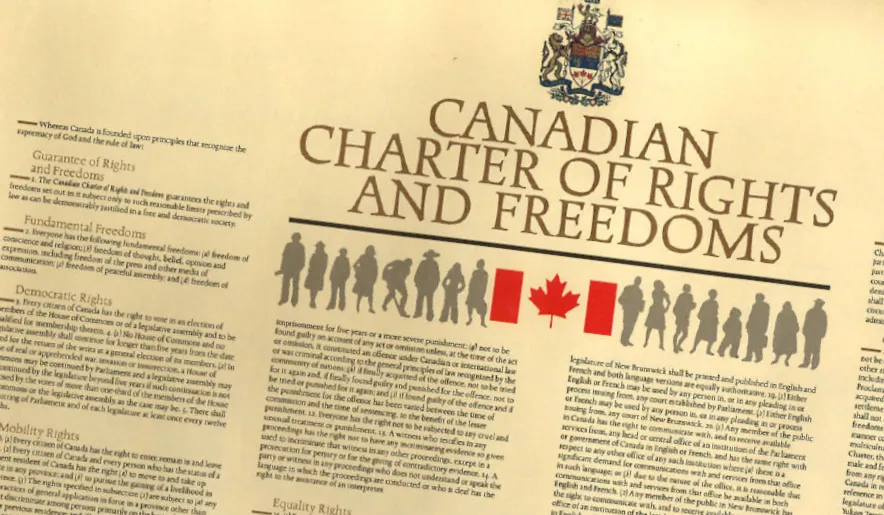
You can see it in the law if you bother to read it. The Constitution now known as the Constitution Acts, 1867 to 1982 opens the Charter with a preamble that says, plainly, that Canada is “founded upon principles that recognize the supremacy of God and the rule of law.” Section 93 of the 1867 Act hard-wires denominational schools – Catholic and Protestant – into the Confederation deal, guaranteeing them constitutional protection. That’s not a neutral state; that’s a Christian settlement written into the operating system.
Even the cultural symbols the elites now treat as background noise are explicitly Christian. The official English lyrics of O Canada beg, “God keep our land glorious and free.” The official French lyrics describe Canada’s arm as knowing how to wield the sword and how to carry the cross. That isn’t generic spirituality. It’s Christian imagery, straight up, written into the national song.
So when the Liberal government and its media chorus talk as if Canada was always meant to be a secular blank slate, understand what’s happening. They’re not just misremembering history. They’re trying to tear up the title deed.
The Squashed-Beef Freedom: How Christians Built the Deal
“Freedom of religion” in Canada did not arrive as a global invitation to every creed under the sun. It emerged as a ceasefire clause inside a Christian civil war. When Britain took over New France, it inherited a Catholic population that would never accept being crushed under a Protestant boot. The Quebec Act of 1774 solved that problem in brutally practical fashion: it allowed the free practice of Roman Catholicism, restored the Church’s right to collect tithes, and let Catholics hold public office under a revised oath of allegiance. That wasn’t progressive pluralism. It was the Empire making peace with a Christian rival to keep the colony stable.
A century later, Confederation faced a different version of the same problem: how to weld a strongly Protestant Ontario to a strongly Catholic Quebec without blowing the project up. Section 93 of the Constitution Act, 1867 answered that question by protecting denominational school rights where they existed at the Union. Catholic schools in Ontario and Protestant minority schools in Quebec were not just tolerated; they were constitutionally entrenched. Later, the Charter’s section 29 would explicitly confirm that these denominational school rights are preserved and not overridden by the Charter itself. You don’t grant that kind of carve-out to a random “community group.”
In practice, that meant the public school architecture of this country was Christian from the ground up. “Public” schools operated within a broadly Protestant frame, while Catholic separate schools had their own publicly funded track, guarded by the Constitution. Freedom of religion meant freedom within that Christian structure: room for Protestants and Catholics to stop killing each other and build a country together. It was never meant as a promise that every worldview, no matter how hostile to that foundation, would someday get equal moral authority over the Canadian state.
The modern claim that Canada was founded as a secular project is not an innocent mistake. It’s the lie you have to tell if your goal is to evict the original faith while pretending nothing fundamental has changed.
The 2021 Reckoning and the Forensic Silence
Fast-forward to 2021, when the state discovered just how useful it is to treat narratives as if they were evidence. In May of that year, Canadians were told that the remains of 215 children had been found at the former Kamloops Indian Residential School. Politicians, media and international commentators spoke as if bodies had been exhumed. Flags went to half-mast for months. Billions in new spending were rolled out. Canada was declared, in effect, a crime scene.
Four years later, one basic fact hasn’t budged: not a single human body has been exhumed or forensically identified at Kamloops. The original claim rests on ground-penetrating radar readings – soil “anomalies” that might represent graves, or might not. Polling now shows many Canadians understand this distinction and want actual proof before treating anomalies as confirmed unmarked graves. That’s called common sense.
Where investigations have happened, the story gets even more inconvenient. At Pine Creek in Manitoba, where fourteen potential graves were suspected under the basement of Our Lady of Seven Sorrows Church, a four-week excavation in 2023 turned up debris and animal bones – but no human remains. Church and mainstream reports alike confirm the dig ended with zero bodies and a chief publicly admitting his disappointment, even as activists rushed to frame the result as “denialism fuel.”
None of this erases the real, documented abuses and deaths in the residential school system. The historical record on that is black enough. But it does show how brazenly the state and its allies used unverified technical scans as if they were autopsy reports. They seized on anomalies as settled genocide, rewired the national story overnight, and created a moral climate where anyone who asked basic forensic questions was smeared as a monster. That wasn’t a search for truth. It was a political prosecution with the verdict pre-written.
And now, in 2025, the next move is already being laid. NDP MP Leah Gazan first introduced Bill C-413 in 2024 and has now reintroduced the same idea as Bill C-254 in 2025: amend the Criminal Code so that “residential school denialism” – condoning, denying, downplaying or justifying the residential school system, or misrepresenting facts about it – becomes a hate offence. The First Nations Leadership Council, the Assembly of First Nations, and a growing network of activists have been explicit: they want denialism written into Canada’s hate-speech architecture, modelled on existing Holocaust-denial provisions. In other words, the state is now deciding that certain historical questions are not just wrong but criminal.
Put that together with what comes next, and you can see the trap being built.
Burned Churches, Quiet Ottawa
Once the narrative was locked in, the arsons began. Since the “215 children” claim in May 2021, at least 85 Catholic churches in Canada have been burned or vandalized, with many more attacks against other Christian denominations. That number doesn’t come from conspiracy blogs; it comes from the Catholic Civil Rights League’s Church Attacks Database and corroborating reporting, which track incidents of arson, desecration and serious vandalism in the absence of any official federal tally.
Some of these churches were historic missions on Indigenous land, where the building was one of the last common gathering points in the community. Others were ordinary parish churches in small towns, the kind of places that mark births, marriages and funerals for people who will never see the inside of a human-rights commission hearing room. To the arsonist, they all looked like the same target: a Christian building that could be burned in the name of “justice.”
And what did the political class do? On July 2, 2021, then–prime minister Justin Trudeau told reporters that the burning and defacing of churches was “unacceptable and wrong” – and in the next breath said he understood the anger against institutions like the Catholic Church, calling that anger “real” and “fully understandable” given Canada’s shameful history. Catholic media, and even some secular outlets, have been quoting that line ever since, because it says quietly what the regime won’t say out loud: Christian pain doesn’t trigger the same alarm bells.
When synagogues are attacked in this country, the reaction is immediate and intense, and it should be. When mosques suffer arson or desecration, the prime minister does not explain on television that the “anger” behind it is understandable. Yet dozens upon dozens of Christian churches can burn, and the political system treats it like a regrettable side effect of a necessary moral reckoning. That’s not even pretending to be neutral. That’s a clear hint about which faith the state is comfortable seeing on the receiving end of the fire.
And here’s the key point for 2025: Mark Carney’s Liberal government has not reversed a word of that attitude. Trudeau’s approach to Christianity always looked personal – emotional, moral-grandstanding politics. Carney’s version is colder. He is the former central banker, the high priest of the technocratic class; for him, sidelining the faith looks less like a tantrum and more like a spreadsheet. The Trudeau Liberals lit the match. The Carney Liberals are managing the file while the ashes cool.
Bill C-9, Denialism, and the Technocratic Squeeze
While churches smoulder and police limp along after the fact, Ottawa has found one area where it can move with impressive speed: tightening the speech laws that govern what Christians are allowed to say in public. Bill C-9, the so-called Combatting Hate Act, is the current flagship under Prime Minister Mark Carney. On the surface, it sounds balanced and even helpful: new offences to protect access to religious and cultural sites, new hate-crime provisions, and a codified definition of “hatred.” The Department of Justice sells it as a shield for vulnerable communities and their places of worship.
Below the surface, the picture shifts. For decades, section 319 of the Criminal Code – the “hate propaganda” section – has contained a narrow but crucial protection. Subsection 319(3)(b) says that no one can be convicted of the wilful-promotion-of-hatred offence if, in good faith, they expressed or tried to establish by argument an opinion on a religious subject or an opinion based on a belief in a religious text. It doesn’t protect true threats. It doesn’t protect calls to violence. It protects people who actually believe their scriptures and are prepared to say so plainly.
In December 2025, the Canadian Conference of Catholic Bishops sounded the alarm in an open letter addressed directly to Prime Minister Mark Carney. The bishops report that the Liberal government has reached an agreement with the Bloc Québécois to eliminate the religious-exemption clause from section 319(3)(b) as part of pushing Bill C-9 through Parliament. The line currently slated for removal is exactly the clause that says, in effect, that if you speak in good faith on a religious subject or from a religious text, you cannot be convicted under that hate-promotion section. Bill C-9 has already passed second reading and sits at the Justice Committee stage with that amendment squarely in play, as briefs from Christian and Muslim organizations to the committee make painfully clear.
Now add the denialism push. Bills C-413 and C-254 from Leah Gazan are openly designed to treat residential-school denialism as a form of wilful promotion of hatred against Indigenous peoples – condoning, denying, downplaying or justifying the residential school system, or “misrepresenting facts” about it, outside private conversation. The First Nations Leadership Council, Assembly of First Nations, law-society activists and a whole ecosystem of NGOs are calling for denialism to be classified as hate speech, and some are explicitly urging that it be folded into Bill C-9 itself as another recognized form of “hatred.”
If the government gets its way on both fronts, here’s the new landscape.
If you point out that Pine Creek’s excavation found zero bodies, or that Kamloops has never produced a single exhumed remain, you risk being branded a “residential school denialist,” accused of “inciting hate” against Indigenous peoples. If, on the other side, you quote Scripture to defend the Church’s role in Canadian history or to teach unpopular Christian doctrine on sex, marriage or truth, you risk being charged with hate propaganda – and now, thanks to Bill C-9, with no explicit statutory defence that your religious speech in good faith is protected.
That is not accidental overlap. That is a pincer movement. Trudeau’s politics came wrapped in tears and costumes; Carney’s comes in briefing notes and committee amendments. One prime minister shouted his moral superiority from the stage. The other quietly programs it into the Criminal Code. From a Christian’s perspective, the second is more dangerous: passion burns out, but procedure runs forever.
No, the government will not march into your home and confiscate your Bible. They don’t need to. Once this defence is gone and denialism-style offences are normalized, the Bible becomes something else in the eyes of the state: not a foundational text that helped build the country, but a live piece of evidence that can push you over the threshold into “hate” or “denialism” the moment you quote it in the wrong context.
A Christian Nation, Whether Ottawa Admits It or Not
Step back and trace the pattern. Canada was founded as a Christian nation, with Protestants and Catholics forced by hard reality to stop their feud by writing Christian assumptions into law: denominational schools protected in the Constitution, a Charter that bows to the supremacy of God, and an anthem that openly calls on Him and speaks of bearing the cross. That’s the groundwork. That’s the house.
What has changed is not the foundation but the people trying to run it. Under Justin Trudeau, the Liberal government and its media allies treated untested radar anomalies as if they were recovered bodies, smeared anyone asking for evidence as a bigot, and watched while churches were burned – all while the prime minister mused about how “fully understandable” the anger behind these crimes really is. Under Mark Carney, the same party now moves to strip away one of the last explicit protections for believers who speak from their Scriptures, while quietly entertaining a denialism framework that can turn forensic caution into a hate crime. Different front man, same project: push the founding faith to the margins and pretend it was never central in the first place.
Here’s the truth they can’t scrub out of the record: Canada is a Christian nation whether Ottawa admits it or not. You can file the crosses off courthouse walls, rename holidays, and hide the Charter preamble behind judicial spin, but you cannot undo the fact that this country’s institutions, laws and culture were built in a Christian frame. The only real question is whether Christians in Canada will act like owners of their own house or like renters waiting for the next notice from the landlord.
So this is the line in the sand. Either you swallow the Liberal lie – that Canada was always meant to be a secular sandbox and Christianity is just one noisy “community” among many – or you refuse it. Refuse it at the ballot box, whether the Liberal leader is Trudeau, Carney, or whoever they roll out next. Refuse it in your school boards and your parish councils. Refuse it every time some bureaucrat suggests that speaking as if God is real is a private eccentricity instead of a public right. Canada will remain a Christian nation only if Christians stop apologizing for existing and start defending the house their ancestors built – against Liberals, and against any other party that picks up the same script.
Sources & Reference Material
- The Constitution Acts, 1867 to 1982 (including Charter preamble and s.93 denominational school protections) — Justice Laws Website
- Official English and French lyrics of “O Canada” — Government of Canada – Canadian Heritage
- Kamloops GPR anomalies, lack of exhumations, and public demand for proof of unmarked graves — Angus Reid Institute
- Pine Creek excavation result (no human remains) and related reporting — Nanaimo News Now
- Church arson wave, CCRL database, and Trudeau’s “fully understandable” comment — Canadian Catholic News / The Catholic Register
- Bill C-9 (Combatting Hate Act) text and government summary — Department of Justice Canada
- CCCB media release on proposed repeal of Criminal Code s.319(3)(b) religious exemption — Canadian Conference of Catholic Bishops
- Leah Gazan’s residential school denialism bills (C-413, C-254) — Parliament of Canada – LEGISinfo
- FNLC and AFN calls for federal residential school denialism law — First Nations Leadership Council
- Prime Minister Mark Carney – office and recent releases — Prime Minister of Canada