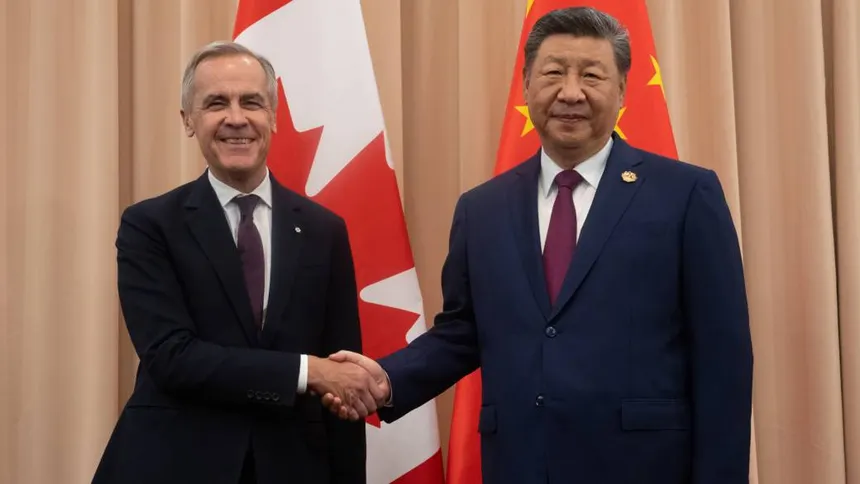
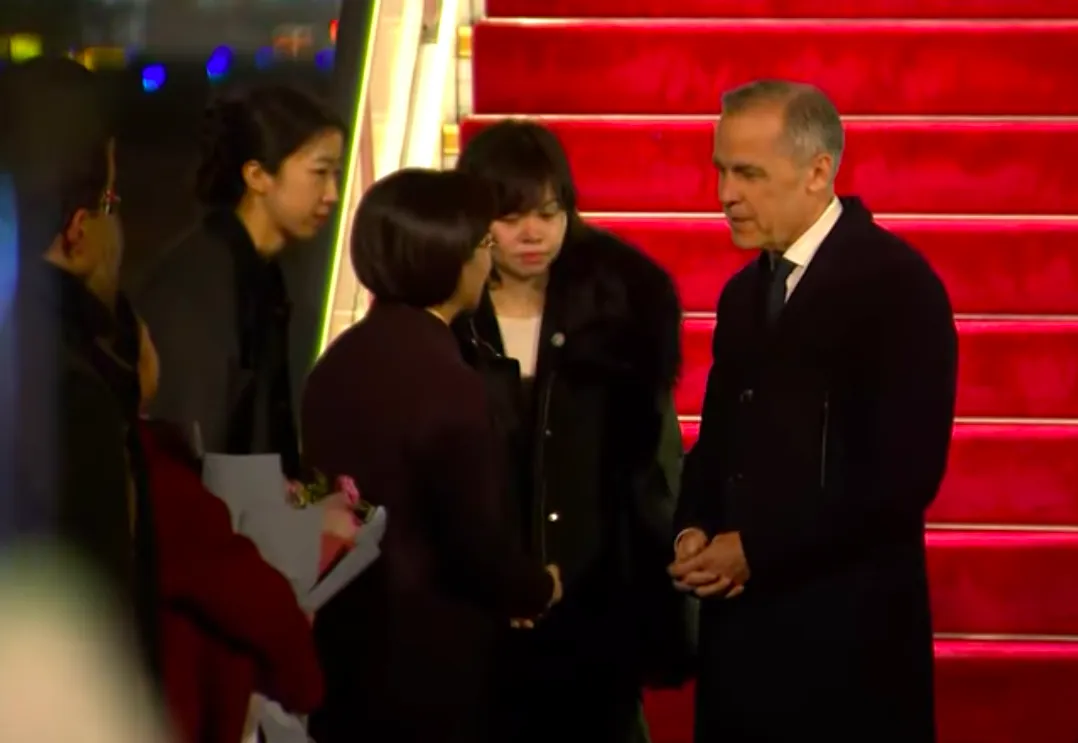
Mark Carney is currently walking the red carpet in Beijing, hoping the visuals of statecraft can distract from the smell of desperation. The Prime Minister’s four-day visit to the People’s Republic—the first by a Canadian leader since 2017—is being sold by the Prime Minister’s Office as a strategic pivot. They call it moving from “reliance to resilience.” They promise to double non-U.S. trade. They speak of “diversification” with the breathless enthusiasm of a consultant discovering a new slide deck.
But let us be clear about what is actually happening. This is not a strategy; it is a reaction. Canada is not expanding its horizons because it wants to; it is running to Beijing because Washington has locked the door. With Donald Trump back in the White House and the review of the Canada-United States-Mexico Agreement (CUSMA) looming like a storm front, Ottawa has decided its best play is to leverage Chinese capital against American protectionism.
It is a high-stakes gamble that misreads both the nature of the Chinese state and the reality of the American electorate. By trying to play two superpowers against each other, Carney risks proving that Canada matters to neither.
The Illusion of Leverage
The logic from the Prime Minister’s team is seductive in its simplicity. The United States has become an unreliable partner, prone to 10 percent universal tariffs and aggressive “America First” re-industrialization. Therefore, Canada must hedge its bets. If the Americans won’t buy our oil and lumber without a penalty, we will sell it to the hungry markets of the East.
On Thursday, Carney’s ministers signed a Memorandum of Understanding with their Chinese counterparts on energy and clean technology. It was a perfect photo-op: clean, bureaucratic, and seemingly productive. It signals to Washington that Canada has options.
Except, we don’t.
China is not a normal trading partner. It is a monopsony buyer that weaponizes market access for political ends. We are currently in a trade dispute over electric vehicles (EVs) and canola—a direct result of Canada following the U.S. lead on EV tariffs last year. China retaliated against Saskatchewan farmers to punish Ottawa for protecting Ontario auto workers.
Carney’s presence in Beijing implies that these structural conflicts can be smoothed over with technocratic dialogue. But the Chinese Communist Party does not negotiate win-win scenarios with middle powers; it extracts concessions. The price of “diversification” into China is silence on security, compliance on data governance, and the gradual erosion of sovereign decision-making.
We are not trading one dependency for another. We are trading a dependency on a loud, protectionist neighbour for a dependency on a silent, coercive rival. One threatens our GDP; the other threatens our institutions.
The Domestic Trade-Off
The domestic politics of this trip are equally cynical. The Liberal government is attempting to thread a needle between two competing Canadian economic realities, and they are likely to prick both.
On one side, we have the manufacturing heartland of Ontario. These voters need the U.S. market and protection from cheap Chinese EVs. They are the reason Carney imposed 100 percent tariffs on Chinese cars in the first place. On the other side, we have the resource economy—Western agriculture and energy—which is currently paying the price for those tariffs through Chinese bans on canola.
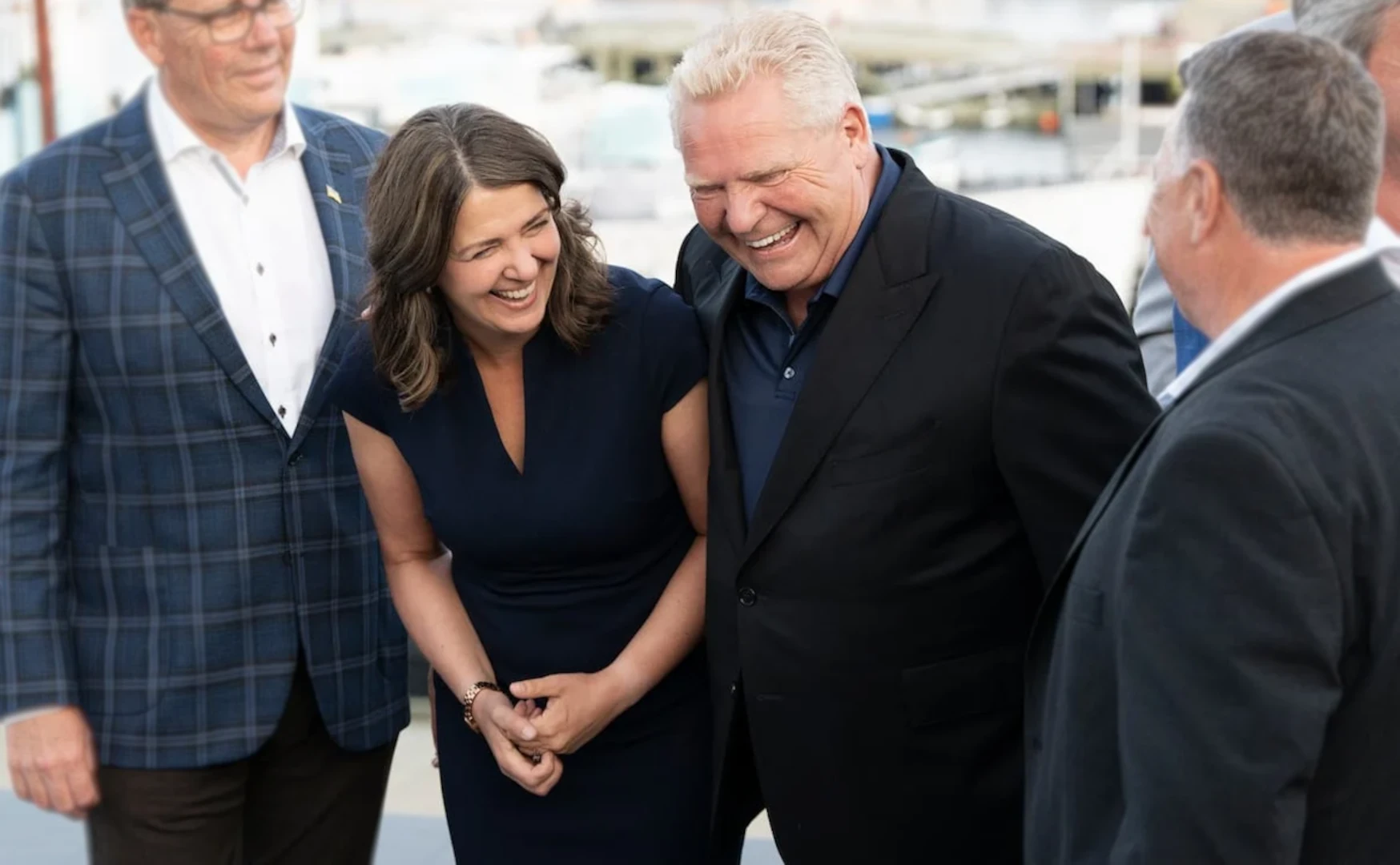
Carney’s “success” in Beijing relies on a contradiction. He must promise Xi Jinping market access to lower tensions, while promising Doug Ford and the auto sector that the wall against Chinese goods will stand. You cannot have it both ways.
If Carney secures a “breakthrough” on canola, the question must be asked: what did he give up? Did he soften Canada’s stance on foreign interference? Did he promise to dilute the EV tariffs? Or did he simply agree to look the other way while Chinese state-owned enterprises buy up distress-sale Canadian assets?
In the opaque world of Beijing diplomacy, the receipt for the transaction is rarely shown to the public until it is too late.
The Washington Problem
The most dangerous audience for this trip is not in Ottawa or Beijing, but in Washington.
The Trump administration views the world through a binary lens: you are either with the American industrial fortress, or you are a leakage point for its enemies. By deepening ties with Beijing just as the U.S. is decoupling, Canada is painting a target on its own back.
The CUSMA review in 2026 is not a formality; it is an interrogation. If the Americans perceive Canada as a backdoor for Chinese goods or capital—a “transshipment” hub for the CCP—they will not just impose tariffs; they will dismantle the integrated North American economy.
Carney thinks he is demonstrating Canadian autonomy. To the hawks in the White House, he is demonstrating that Canada is a security risk. The “Donroe Doctrine” of the second Trump term is about securing the Western Hemisphere against external influence. A Canadian Prime Minister shaking hands with Xi Jinping while asking for a CUSMA exemption is unlikely to be viewed as a “savvy negotiator.” He will be viewed as a defector.
The Technocratic Fallacy
Ultimately, this trip reveals the core flaw in the Carney doctrine. It assumes that global trade is still a system of rules, governed by rational actors who want to maximize efficiency. It assumes that if we just get the “frameworks” right—the MOUs, the working groups, the diversification targets—prosperity will follow.
But the era of rules-based globalization is dead. We are in an era of raw power politics.
The United States is re-shoring. China is insulating. The middle ground where Canada used to thrive is disappearing. Flying to Beijing to sign energy agreements that may never materialize is not a strategy; it is nostalgia for a world that no longer exists.
True resilience does not come from begging for market share in a dictatorship. It comes from making the Canadian economy so competitive, so resource-rich, and so indispensable that our partners have no choice but to trade with us. It comes from fast-tracking our own energy infrastructure, cutting the regulatory anchors dragging down our productivity, and securing our northern border.
Carney is right that we need to survive the American shift. But seeking salvation in the arms of the Chinese Communist Party is not a lifeline. It is a trap.
Sources & Reference Material
- Prime Minister Carney to build strategic partnerships, diversify Canada’s trade — PRIME MINISTER OF CANADA
- Carney’s 1st day in China secures agreements on energy — CBC NEWS
- The Trade Minefield of Carney’s China Visit — POLICY MAGAZINE
- Five Things to Watch During Prime Minister Carney’s High-Stakes Visit to China — ASIA PACIFIC FOUNDATION OF CANADA