If you want to understand why the federal government is currently insolvent in both credibility and cash, look no further than the receipts from Cape Breton.
For six weeks, Ottawa ran a “pilot” of its national gun buyback program in Nova Scotia. The objective was to test the systems that will eventually spend three-quarters of a billion dollars of your money. The target was modest: collect 200 firearms from a willing populace in a region with a historically high rate of regulatory compliance.
The results are in, and they are an indictment of the entire administrative state.
According to federal data released this month, the pilot collected exactly 25 guns from 16 people. To achieve this underwhelming compliance, the federal government paid the Cape Breton Regional Municipality roughly $149,000 in administrative costs, plus another $26,000 in compensation to the gun owners.
Do the math. That is an average cost of nearly $7,000 per firearm collected.
For the price of taking a single hunting rifle out of circulation in rural Nova Scotia—a rifle that was likely sitting in a locked cabinet, hurting no one—we could have outfitted a front-line police officer with a new vest, sidearm, and weeks of training. Instead, we have a receipt for a program that is mathematically incapable of scaling.
The Provincial Revolt
It is no surprise, then, that the provinces are closing their doors to this fiscal incinerator.
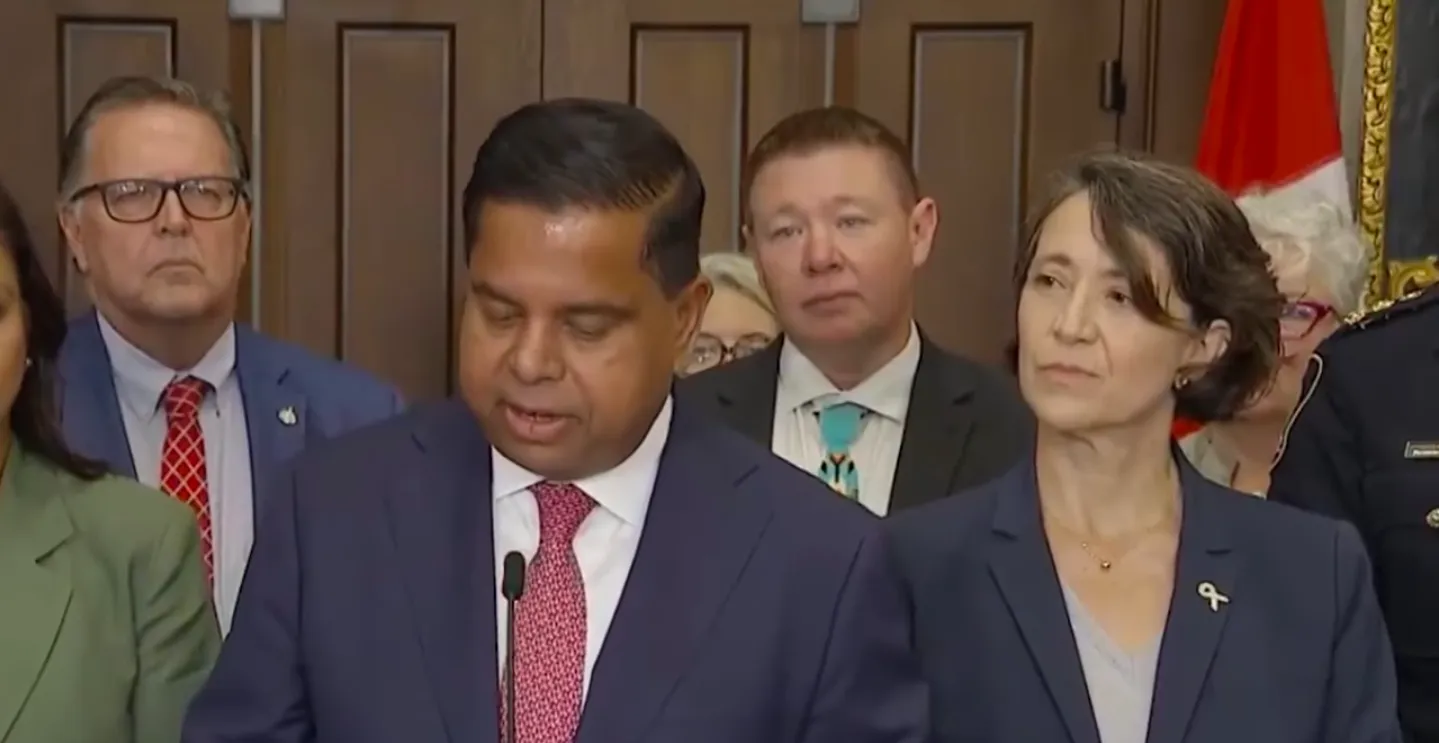
On January 15, Manitoba Justice Minister Matt Wiebe sent a formal letter to Ottawa refusing to administer the program. He joined Alberta and Saskatchewan in explicitly rejecting the federal request to divert provincial resources to the buyback.
This is the turning point where the federal narrative collapses. Manitoba is not led by a “conservative” firebrand; it is led by the NDP. Premier Wab Kinew is a gun owner. His government’s refusal is not based on ideological obstructionism; it is based on basic administrative competence. Wiebe’s letter was blunt: provincial law enforcement resources are for “front-line policing,” not for staffing a federal confiscation scheme that costs $7,000 per unit to execute.
When an NDP Justice Minister in Winnipeg and a UCP Justice Minister in Edmonton agree that a federal program is a waste of police time, the debate is no longer about “gun control.” It is about reality control. The provinces have realized that every hour a police officer spends processing a buyback form for a compliant duck hunter is an hour they are not investigating a car theft, a break-in, or a drug trafficking ring.
Budgetary Fantasy
The federal government has earmarked $742 million in Budget 2025 to roll this program out nationally. If the Cape Breton pilot is the benchmark, that money will evaporate before it makes a dent in the actual inventory of illicit firearms in this country.
The math simply does not work. If the administrative friction observed in Cape Breton holds true nationally—where overhead consumes 85% of the budget and actual compensation only 15%—the program will become a self-licking ice cream cone of bureaucracy. It will employ hundreds of civil servants to process paperwork for a handful of compliant owners, while the criminal element continues to source Glocks from cross-border smugglers who do not care about amnesty periods.
This is the definition of “performative policy.” It is designed to look like action on the 6:00 PM news, but in the cold light of a spreadsheet, it is a wealth transfer to consultants and administrators. The actual public safety return is statistically negligible.
The Accountability Void
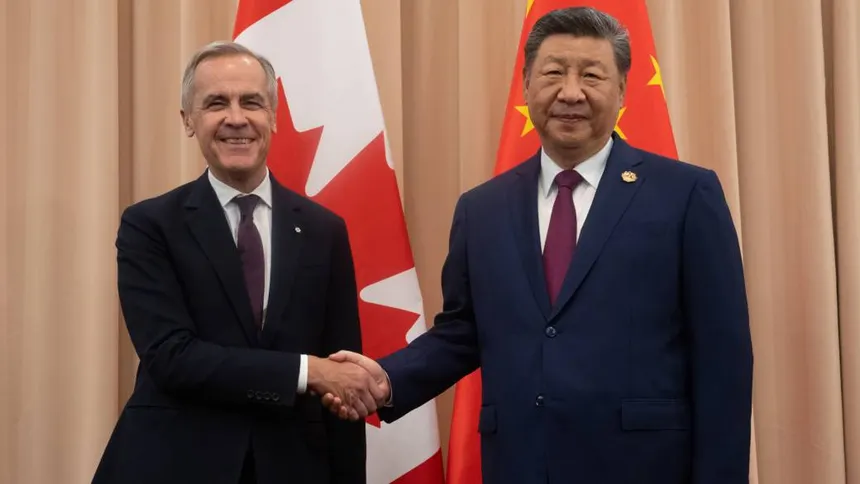
While the Prime Minister is in Beijing, securing high-level handshakes and discussing global trade frameworks, the machinery of his government back home is grinding gears.
The buyback program is a perfect case study of the current federal malaise: a policy designed in a seminar room, unmoored from operational reality, and defended only by those whose paycheques depend on it. The “Carney Liberals” promised a technocratic competence that would fix the messy implementation of the previous years. Instead, we are seeing the same expensive failures, only with higher price tags.
The disconnect is palpable. In Ottawa, $7,000 to collect one gun is a “pilot project learning.” In Winnipeg, Regina, or rural Nova Scotia, it is a scandal. It represents a fundamental misunderstanding of the value of public money.
The Opportunity Cost
The most damning aspect of this failure is not the money lost, but the opportunity cost.
Canadian law enforcement is currently straining under the weight of a violent crime wave, an opioid crisis, and a border that is porous to illegal handguns. That $742 million earmarked for the buyback is real money. It could build a national border enforcement task force. It could fund gang diversion programs in every major city. It could pay for actual boots on the ground to intercept the illegal weapons that are actually used in crimes.
Instead, the federal government is fixated on the property of the 16 people in Cape Breton who bothered to show up.
The Verdict
Manitoba’s refusal creates a logistical deadlock. Without provincial police cooperation, the federal government has no mechanism to enforce this buyback outside of hiring a private army of contractors—which would likely drive the cost per gun from $7,000 to $10,000.
Ottawa faces a choice. It can admit the pilot was a failure, scrap the rollout, and redirect that funding to measures that might actually lower the crime rate. Or, it can press on, burning cash purely to avoid admitting they were wrong.
If history is any guide, they will choose the burn. But they can no longer claim they are doing it for public safety. The receipts from Cape Breton prove otherwise.
Sources & Reference Material
- Manitoba refuses federal buyback — CBC News
- Taxpayers Federation on Pilot Costs — Canadian Taxpayers Federation
- Cape Breton Pilot Data — Global News
- Manitoba NDP/Kinew Stance — Winnipeg Free Press / Reddit Thread