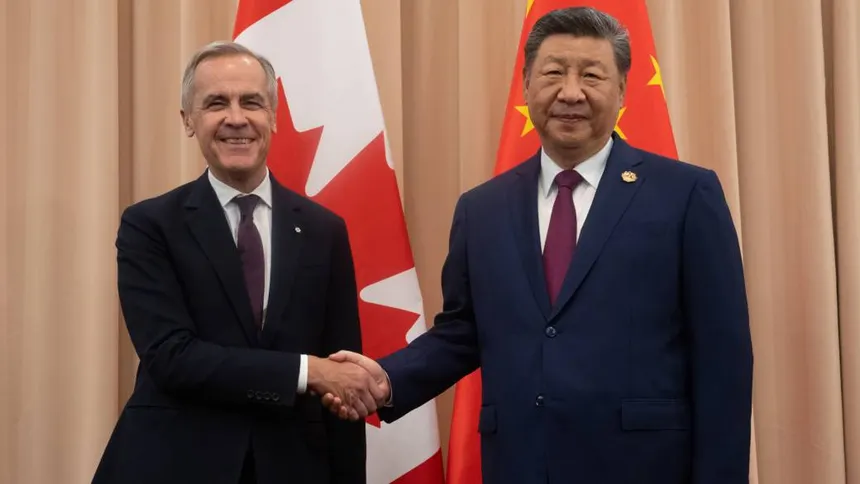
The diplomatic fiction that “Governor” Carney speaks for all of Canada has officially collapsed. Reports circulating this morning out of Washington suggest that the Trump administration is no longer interested in negotiating with the Prime Minister’s Office. Instead, U.S. Trade Representative Jamieson Greer is reportedly exploring “Regional Exemptions” to the looming 100% tariff wall—a move that effectively treats Canadian provinces as independent economic entities.
By establishing direct back-channels with the Premier’s offices in Alberta and Ontario, the White House is executing a surgical “divide and conquer” strategy. The offer on the table is as simple as it is devastating for federal authority: Washington may waive punitive tariffs for provinces that independently align with U.S. security and energy protocols. This is not a negotiation; it is an invitation for the provinces to secede from the federal trade umbrella to save their own economies.
For months, the federal government has banked on the “Team Canada” approach, an exhausted strategy of bureaucratic solidarity that assumes Washington values a unified northern neighbor. That assumption was proven false the moment the U.S. linked trade relief to participation in the “Golden Dome”—a multi-layered, space-based missile defense shield. While Ottawa hesitates over the $71 billion price tag and the “weaponization of space,” Washington is looking for partners who don’t require a lecture on geopolitics before signing a cheque.
The Provincial Pivot
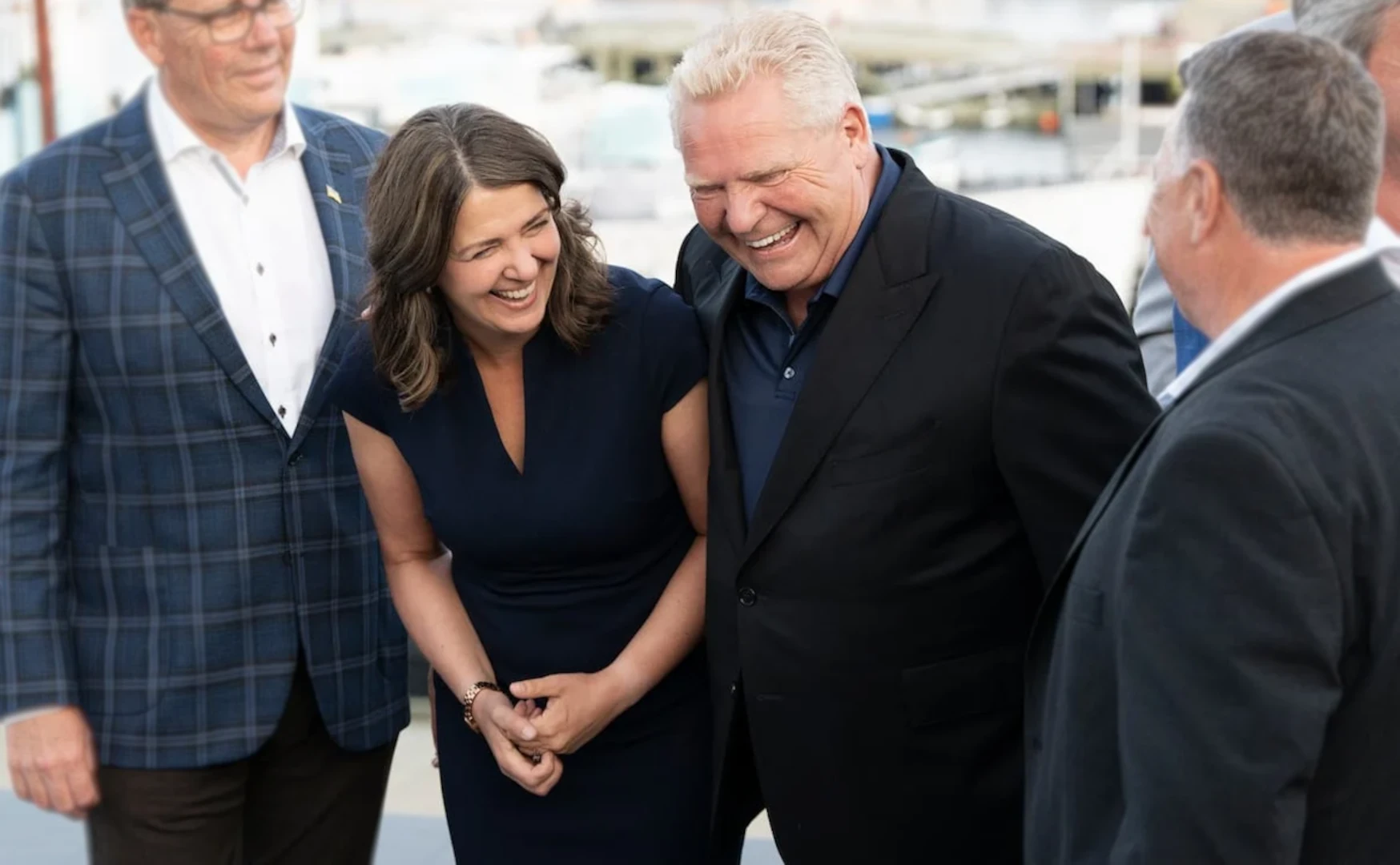
The response from Edmonton has been swift and unapologetic. Premier Danielle Smith is reportedly drafting a formal letter to the White House, accepting an invitation to discuss “Energy Security” as a distinct provincial priority. For Alberta, the logic is inescapable. The province’s oil and gas sector remains the lifeblood of the Canadian economy, yet it is currently being choked by federal regulatory inertia and the threat of total market exclusion that Carney has failed to resolve.
Smith’s “breakthrough” in Washington last year signaled this shift. She has consistently argued that Alberta can act as the “reliable partner” the U.S. needs to achieve energy dominance. By engaging directly with Ambassador Greer, Smith is signaling that Alberta will not allow its primary industry to be held hostage by a federal government more interested in climate virtue-signaling than cross-border commerce.
Ontario, too, finds itself in a precarious position. As the hub of the North American automotive supply chain, the province is uniquely vulnerable to the threatened 100% trade blockade on non-compliant sectors. If Washington offers Queen’s Park a way out through direct security cooperation—specifically integration into the Golden Dome’s industrial supply chain—the pressure on Premier Ford to bypass the PMO will become unbearable. The choice for Ontario is clear: maintain federal loyalty and watch the manufacturing sector bleed out, or cut a deal with the only market that matters.
The Federal Vacuum
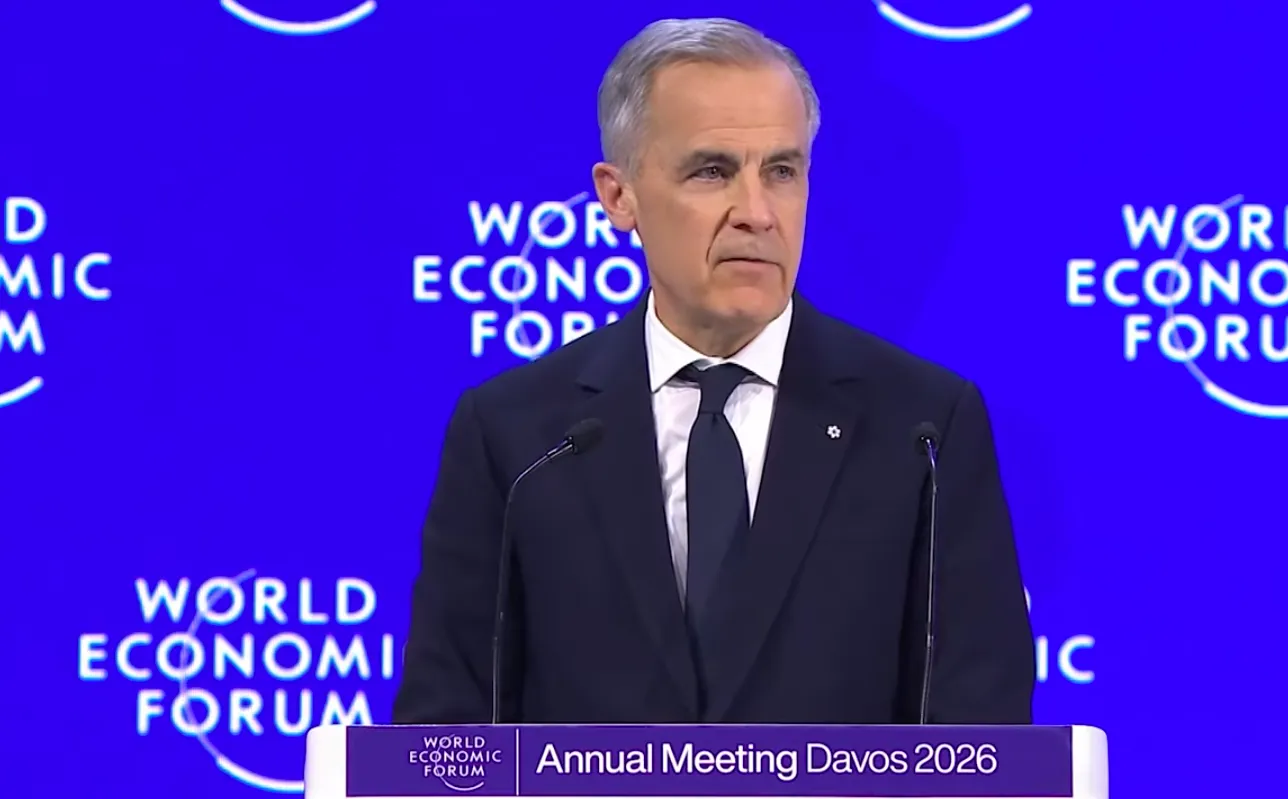
This fragmentation is the direct result of a federal leadership vacuum. The Prime Minister’s recent rhetoric at the World Economic Forum, where he warned that “the old order is not coming back,” was intended to project strength. Instead, it highlighted Canada’s isolation. When the U.S. President describes the CUSMA pact as “irrelevant” and rescinds invitations to peace summits, the “middle power” posturing of the federal government loses all currency.
Washington has recognized what many in Western Canada have known for years: the federal government is a middleman that adds cost but no value to the bilateral relationship. By offering regional exemptions, the Trump administration is providing a pressure valve for provincial grievances. It is a brilliant, if ruthless, play that leverages the internal fractures of the Canadian federation to secure U.S. strategic goals.
The “Golden Dome” is the ultimate wedge issue. For the U.S., it is a non-negotiable requirement for North American security. For the Canadian federal government, it is a budget-breaking sovereignty risk. For the provinces, it is a transaction. Alberta and Ontario are realizing that “sovereignty” is a cold comfort when your industries are shuttering. If the federal government cannot provide the security of trade access, the provinces will find someone who can.
The Inevitable Verdict
We are witnessing the end of the “Team Canada” era. The White House has realized that it doesn’t need to break Canada; it only needs to wait for Canada to break itself. By bypassing the federal government and dealing directly with the provinces, Washington is exposing the fundamental weakness of a centralized trade policy that ignores regional realities.
If Alberta and Ontario move forward with these back-channels, the federal government’s role in the upcoming 2026 CUSMA review will be reduced to that of an observer. The “Golden Dome” will be built, the energy will flow, and the manufacturing lines will stay open—but the deals will be signed in Edmonton and Toronto, not Ottawa. The federal government didn’t lose its seat at the table; it simply became the menu.
Sources & Reference Material
- Trump threatens 100 per cent tariffs on Canada over China trade ties — GLOBAL NEWS
- Ambassador Jamieson Greer | United States Trade Representative — USTR
- Prime Minister Carney to hold winter Cabinet Planning Forum — PRIME MINISTER OF CANADA
- Golden Dome and Canada: The New Age of Integrated Air and Missile Defence — CONFERENCE OF DEFENCE ASSOCIATIONS INSTITUTE
- Smith says she sees a breakthrough in talks with Americans on energy — CTV NEWS